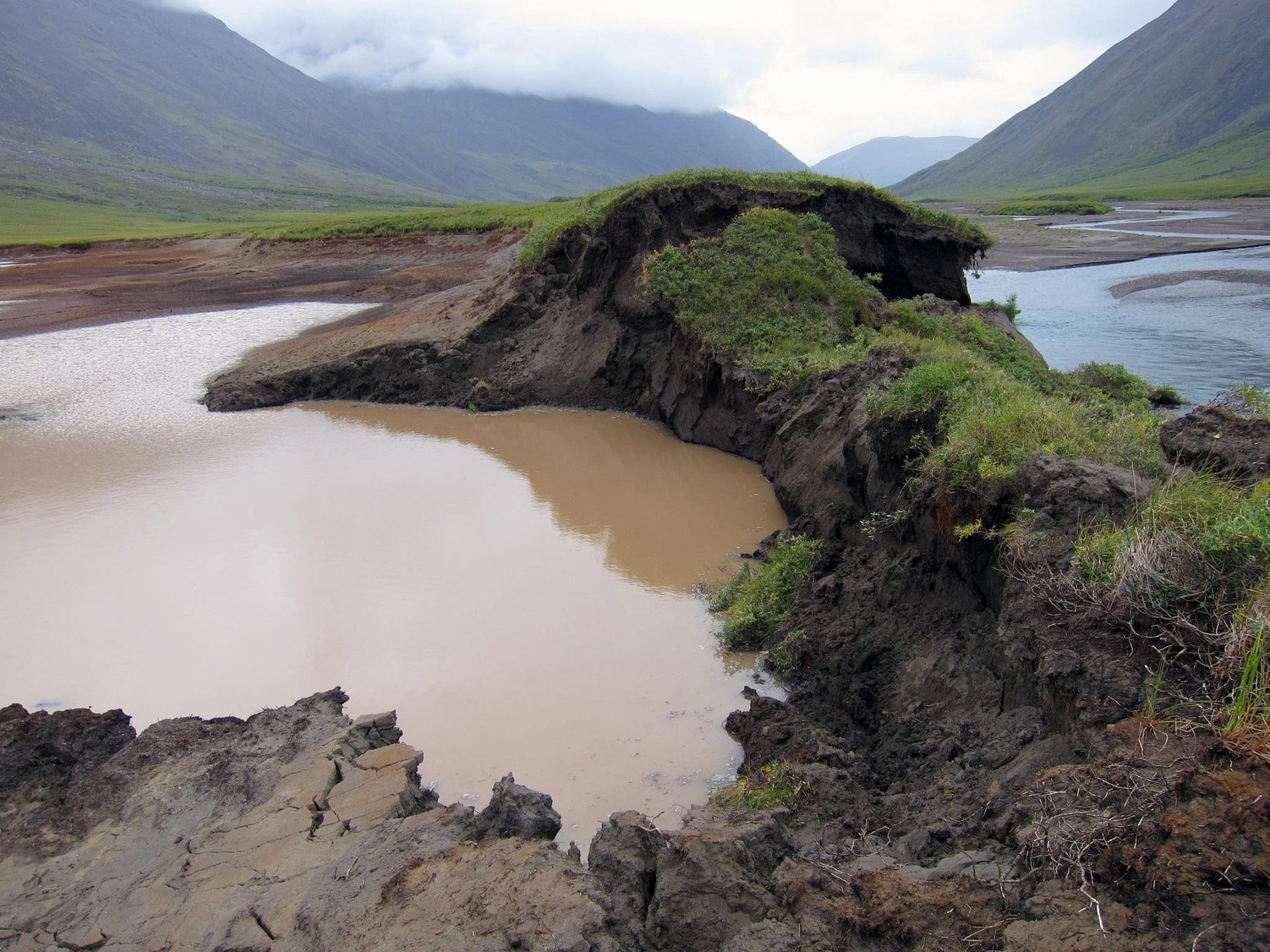
Thawing Arctic permafrost is releasing methane and carbon dioxide that had been locked in frozen ground for millennia, adding to human-driven warming, Associated Press science writer Seth Borenstein reported Thursday from Alaska. The Arctic is warming about four times faster than the rest of the globe, and permafrost holds about three times as much carbon as is now in the atmosphere, according to the report.
Northern Arizona University ecologist Ted Schuur, walking the edge of Alaska’s Smith Lake as methane bubbles surfaced from the muck, called the release one of climate change’s scary tipping points. “Once you start leaking this carbon out, there’s so much in the ground that it’s not going to shut off,” he said. “Essentially every year is setting a permafrost record.” Stockholm University’s Gustaf Hugelius said, “The permafrost system is really like a sleeping giant.” Columbia University ecologist Duncan Menge said the Arctic, long a net carbon sink, is now adding to the problem.
Two studies project that gases released from permafrost will add nearly half a degree Fahrenheit (about a quarter degree Celsius) of warming by the end of the century on top of fossil-fuel emissions, comparable over that period to the warming contribution of a major industrialized country such as the United States or the whole of Europe, scientists said. A September study co-authored by Woodwell Climate Research Center ecologist Sue Natali found that permafrost thaw, along with other warming-induced emissions from fires and changes to wetlands and lakes, is likely to increase warming by 20% by century’s end. Natali and Hugelius said projections such as the U.N.’s estimate of 2.6 degrees Celsius (4.7 degrees Fahrenheit) of warming without policy changes leave out a few tenths of a degree from thawing permafrost.
Thaw is also destabilizing the ground itself. A Woodwell team has identified more than 40,000 thaw slumps, craterlike holes that form when ground ice melts and the land collapses, across the Arctic using satellites, scientist Kyle Arndt said. University of Alaska Fairbanks geophysicist Vladimir Romanovsky said that when he began studying permafrost in the 1970s, “everybody believed permafrost was very stable.” Now, he said, “You need a new ice age to put back this ice into the ground.”