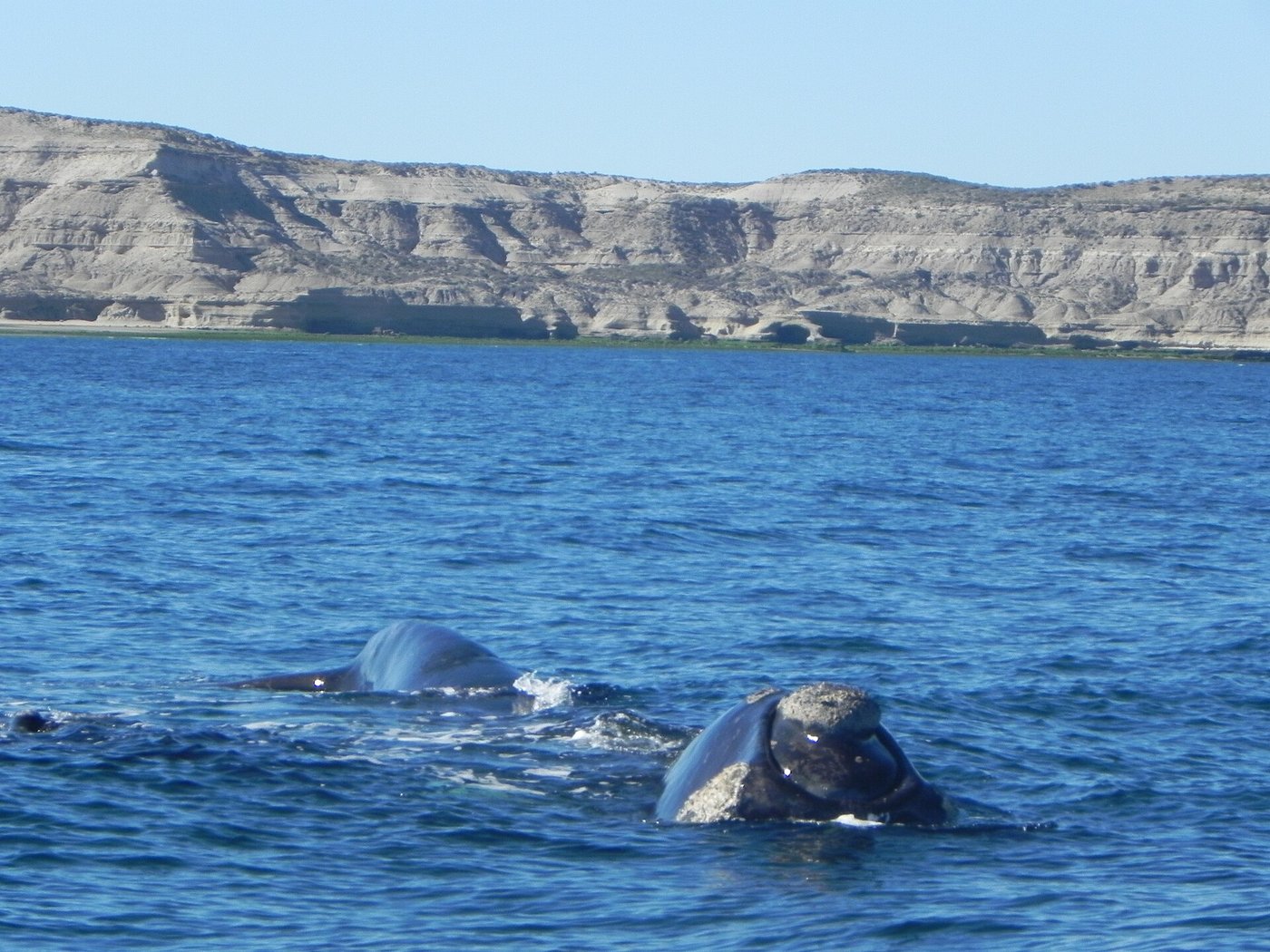
Scientists monitoring southern right whales at Península Valdés in Argentina’s Chubut province have recorded an unusual number of deaths among calves and adults since July, and expect this could be the worst year on record, El País reported.
Researchers and the provincial government are withholding an official death toll until the season ends; unofficial estimates put it at more than 300, El País reported. The monitoring program run by the Whale Conservation Institute since 2003 previously recorded peaks of 113 dead calves in 2012 and 28 dead adults in 2022.
Calf deaths have been linked to the bacterium Erysipelothrix rhusiopathiae, which causes erysipelas, said Mariano Coscarella of the Center for the Study of Marine Systems. “It is a bacterium that lives on the whale’s skin and can enter through wounds, such as gull pecks, or through ingestion of food,” he told El País (translated from Spanish). In adults, the cause remains under investigation, though researchers suspect a harmful algal bloom, or “red tide,” which was behind the 2022 spike.
Coscarella said researchers found no direct evidence that human activity caused the deaths, El País reported. The health monitoring program, led by veterinarian Marcela Uhart of the University of California, Davis, is conducting necropsies and will add sampling of water and shellfish in the Nuevo and San José gulfs. Clarín (opens in new tab) reported that the calf deaths began in July and that adult and juvenile deaths began appearing from late September.
The population visiting Península Valdés grew from about 500 whales in the late 1990s to a peak of 2,110 in 2025; this year 1,375 were recorded, including 409 calves, El País reported, citing the Marine Mammal Laboratory. In Puerto Madryn, five southern right whales were found dead in less than 48 hours in recent days, several on the city’s central waterfront, and local authorities drew up a burial protocol for carcasses, La Nación (opens in new tab) reported.