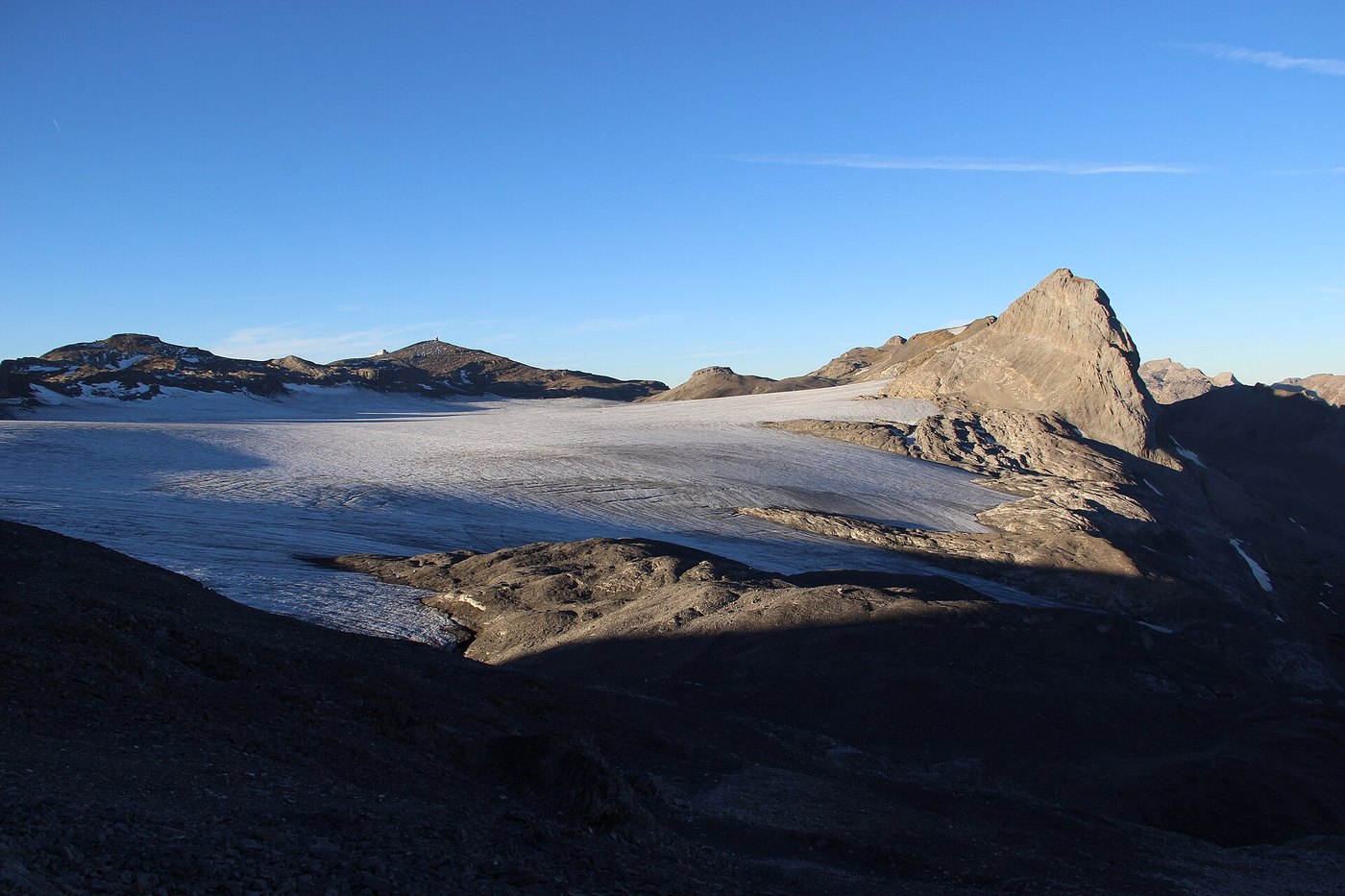
Even a temporary rise in global temperatures above the Paris agreement's 1.5C goal would cause widespread and often permanent losses of the world's snow and ice, according to a report released Monday by the International Cryosphere Climate Initiative (opens in new tab) and the UN Environment Programme.
The report, by about 80 scientists, says that because some overshoot of 1.5C now appears unavoidable, warming should stay above that line for as short a time as possible. It also says enough carbon dioxide should eventually be removed from the air to bring long-term warming much lower, ideally below 1C by 2150, The Guardian (opens in new tab) reported. The planet has warmed about 1.3C since pre-industrial times.
Under current policies, which the report says lead to about 2.8C of warming, glaciers in the Rockies, the Alps, Iceland and Scandinavia would shrink to less than 10% of their present mass. Limiting warming to 1.5C would leave about 20% to 35%. In the Hindu Kush Himalaya, current policies would leave 41% of glacier ice, compared with 83% at 1.5C.
The Greenland and Antarctic ice sheets are now losing ice about six times faster than in the 1990s and would keep losing ice even if a short overshoot were reversed, the report found. The authors say a safe long-term limit for the ice sheets is closer to 1C of warming, and possibly lower. A high overshoot to about 3C would thaw nearly all near-surface permafrost.
“Snow and ice respond rapidly to every fraction of a degree of warming,” said lead author James Kirkham, a glaciologist at the initiative. “But most of these systems will take centuries or millennia to recover after overshoot.”
The initiative calls for emissions cuts of at least 5% a year starting now, a phase-out of fossil fuels and later carbon removal. The report comes as governments gather in Turkey for this year's UN climate conference.