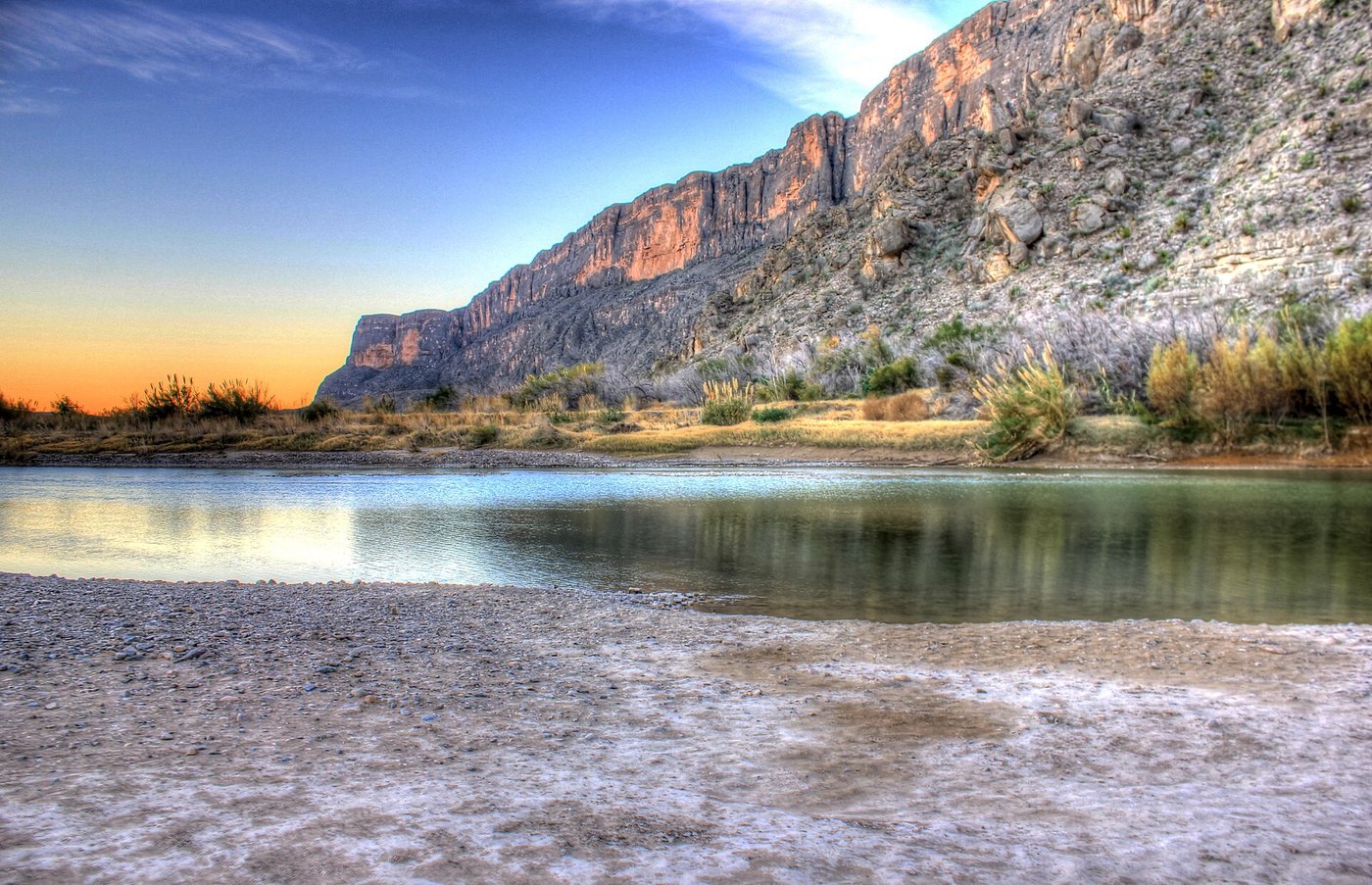
The Trump administration on Wednesday, Oct. 21, asked the Supreme Court to lift a lower-court injunction that bars the Department of Homeland Security from building a border barrier or related infrastructure in the Big Bend Sector of West Texas, CBS News (opens in new tab) and SCOTUSblog (opens in new tab) reported. The government asked the justices to pause the order, take up the case and summarily reverse it, SCOTUSblog (opens in new tab) said.
“The district court’s injunction significantly frustrates the government’s ability to stop the flow of illegal aliens and drugs across the southern border,” Solicitor General D. John Sauer wrote, according to CBS News (opens in new tab). SCOTUSblog (opens in new tab) reported that Sauer called the trial judge’s order “baseless” and “unprecedented.”
U.S. District Judge Kathleen Cardone in El Paso on Oct. 2 barred construction in the sector “until and unless” the government complies with environmental and other applicable laws, SCOTUSblog (opens in new tab) reported. In an Oct. 14 opinion, she found the challengers were likely to prevail on a claim that the Homeland Security secretary lacked power to issue the waivers, citing evidence that the Big Bend Sector has the lowest rate of illegal entry along the border, according to SCOTUSblog (opens in new tab).
The suit was filed in April by an environmental nonprofit, a river guide and a group dedicated to preserving a church along the Rio Grande, CBS News (opens in new tab) reported; FOX 7 Austin (opens in new tab) identified the plaintiffs as the Center for Biological Diversity, Friends of the Ruidosa Church and an area river guide. Former Secretary Kristi Noem and her successor, Markwayne Mullin, issued the waivers, CBS reported. The government says more than 89,000 people were apprehended in the sector between 2021 and 2025; the plaintiffs say it ranks last for apprehensions among the southern border’s sectors.
Customs and Border Protection has said the wall itself will not cut through Big Bend National Park, but other infrastructure would, including patrol roads, detection technology and roughly 17 miles of vehicle barriers, CBS News (opens in new tab) reported. “We’re deeply disappointed that the Trump administration is asking the Supreme Court for a green light to bulldoze one of America’s wildest, most extraordinary landscapes,” Zeynep Graves, a senior attorney at the Center for Biological Diversity, said, according to FOX 7 Austin (opens in new tab).