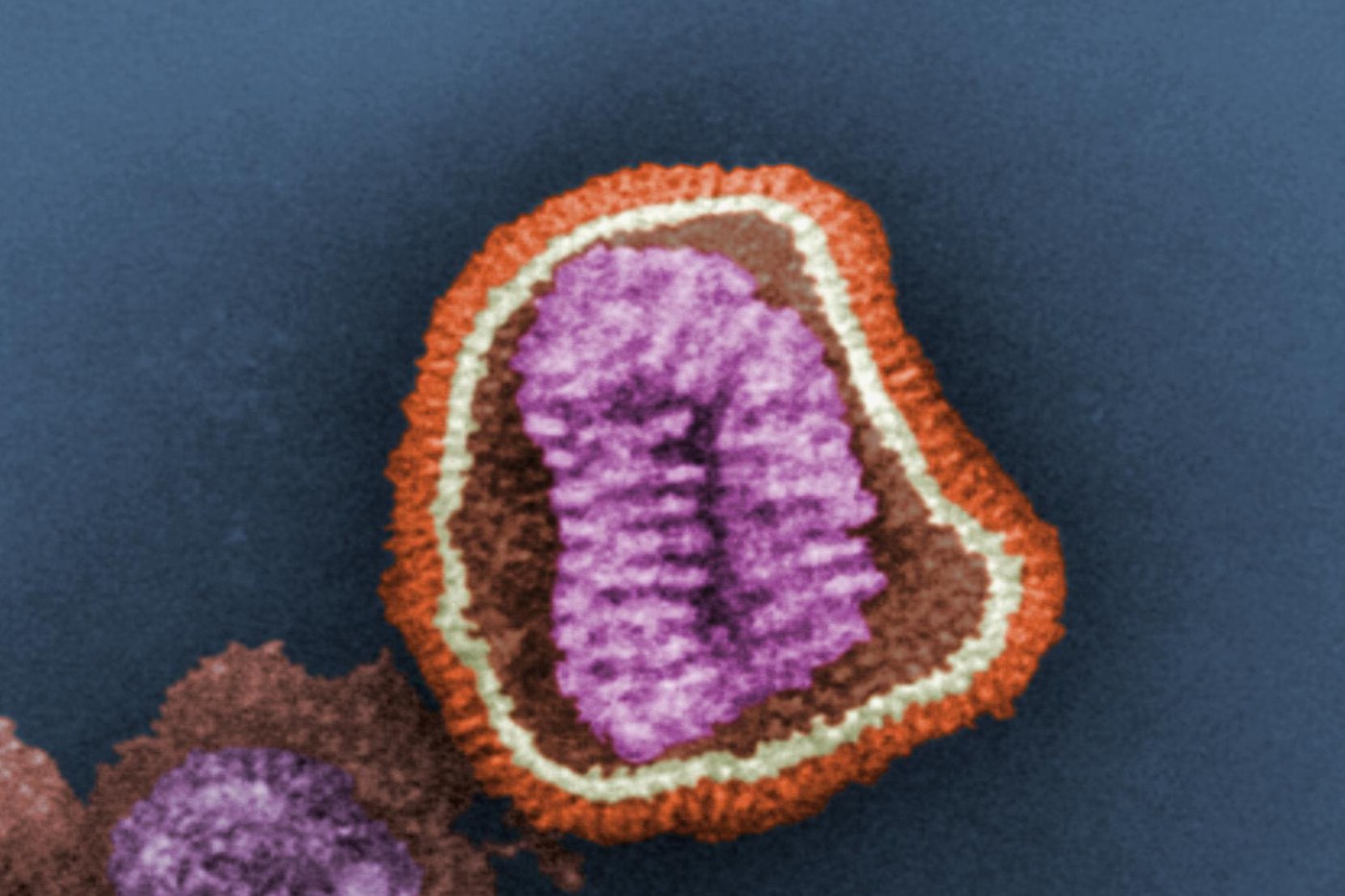
“Early-season influenza activity is currently higher than typically observed at this time of year,” the Centers for Disease Control and Prevention said in its latest FluView report, which covers the week ending Oct. 17. Clinical laboratories reported that 5.7% of flu tests were positive that week. NBC News (opens in new tab) reported that positivity was below 1% at the same point last year.
Influenza A(H1N1)pdm09, the strain behind the 2009 swine flu pandemic, accounts for almost all cases so far. Of 241 viruses subtyped by public health laboratories that week, 239 were H1N1, according to the CDC. The agency said the weekly hospitalization rate in its FluSurv-NET network was the highest for that week of the season since 2010-2011. No pediatric flu deaths have been reported this season.
Researchers are watching a mutation called G155E in circulating H1N1 viruses. Alex Greninger, a virologist at the University of Washington, told Nature (opens in new tab) that his lab found it in 13 of 17 fully sequenced H1N1 samples from Seattle. A preprint led by Jesse Bloom of the Fred Hutchinson Cancer Center, which has not yet been peer reviewed, found that some strains with the mutation were less well recognized by existing antibodies. Nature (opens in new tab) reported the effect was strongest in serum from teenagers and young adults.
The CDC said: “It is too early to know what viruses may predominate or to say whether there might be implications on flu vaccine effectiveness this season.” “An early start doesn’t necessarily mean a more severe season,” James Hay, an epidemiologist at the University of Oxford, told Nature (opens in new tab). Andrew Pekosz of the Johns Hopkins Bloomberg School of Public Health told NBC News (opens in new tab): “A mismatch is not a black-or-white situation. We may have less immunity, not no immunity.”
The 2026-27 vaccines protect against H1N1, H3N2 and influenza B. Scott Hensley, a microbiologist at the University of Pennsylvania, told the Guardian (opens in new tab) that “it is probably a good idea to get vaccinated early.” Separately, the CDC reported a confirmed H5N1 bird flu infection in a dairy farm worker in Washington state, the first such dairy-linked case there. The worker had eye irritation and upper respiratory symptoms, and no human-to-human spread of H5 viruses has been identified in the US.
The CDC also reported that eight H1N1 viruses collected in the U.S. since May 24 showed reduced inhibition by oseltamivir, the antiviral sold as Tamiflu. The viruses carried two amino acid substitutions in the neuraminidase protein, NA-I223V and NA-S247N, the agency said. None of the 520 viruses tested showed reduced inhibition by peramivir or zanamivir, and none of 485 tested showed decreased susceptibility to baloxavir.
By age, adults 65 and older had the highest FluSurv-NET hospitalization rate in Week 41, at 7.4 per 100,000, followed by adults 50 to 64 at 2.3 and children up to age 4 at 1.7, according to the CDC. The agency said the week’s rate of 1.1 per 100,000 likely ranges from 1.5 to 2.0 after accounting for reporting delays. Hospitals reported 4,811 laboratory-confirmed flu admissions nationally that week.
ABC News (opens in new tab) reported that data from Walgreens suggest flu activity is tracking about four weeks ahead of recent flu seasons, with some of the highest levels in California, Florida, Hawaii, Nevada and Washington.