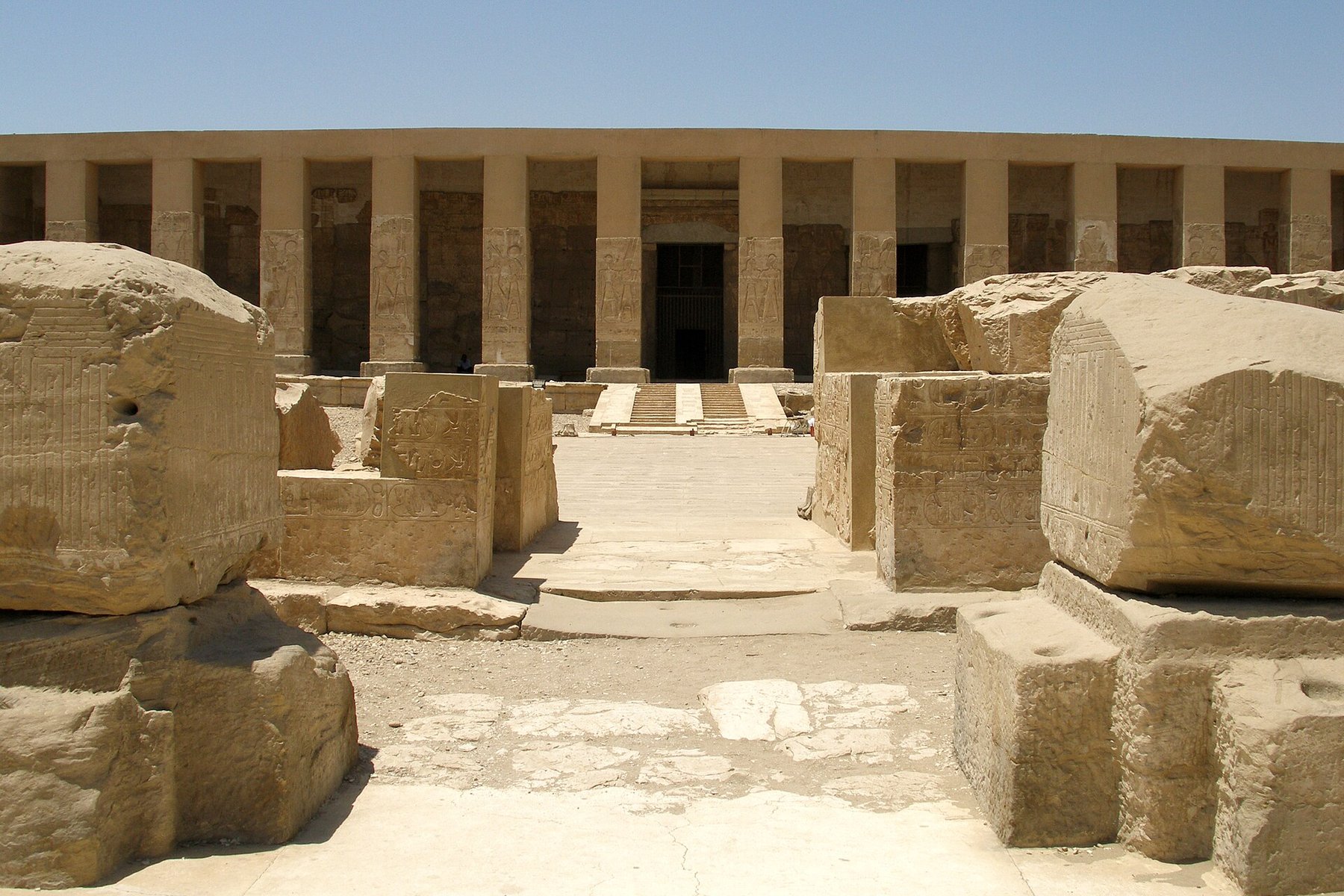
A paper published Oct. 5, 2026, in Frontiers in Environmental Archaeology reports that 18 of 46 First Dynasty retainer skulls from Abydos show potentially lethal perimortem cranial trauma, which the author interprets as evidence consistent with retainer sacrifice. The study, “New data from old bones: using bioarchaeology and forensics to reassess legacy data from ancient Abydos, Egypt,” is by Roselyn A. Campbell of Purdue University (doi:10.3389/fearc.2026.1858940). Campbell re-examined crania from the Duckworth Collection at Cambridge that Flinders Petrie retained from 1920s excavations around the funerary complexes of Kings Djer and Djet and Queen Merneith at Umm el-Qa’ab.
Campbell writes that evidence for perimortem, potentially lethal cranial trauma was found in 18 (39%) of the 46 preserved crania, most often linear fractures across the vault, with some sharp-force injuries. “The injuries on the preserved crania are generally linear fractures, which would likely cause rapid unconsciousness, internal bleeding, and death,” she said in a Frontiers/EurekAlert release. Petrie had suspected sacrifice because so many subsidiary graves appeared to have been closed at once, but he did not identify fatal wounds with the methods of his time; Campbell argues modern forensics can recognize trauma he misread as natural damage.
Campbell stressed limits of the evidence. “With such a small sample size of the original burial population, we simply can’t see the full extent of these funerary rituals, nor can we be sure that this sample is truly representative of all the retainers,” she told the Guardian (opens in new tab). The paper’s limitations section notes the remains are incomplete, were modified by historic conservation, and may not represent the original burial populations. Ars Technica (opens in new tab) and ScienceAlert (opens in new tab) covered the findings as support for the retainer-sacrifice interpretation rather than as settled proof that every retainer was killed.