Researchers say they have found what appear to be fossilized red blood cells, along with chemical traces of the molecule heme, in the leg bones of a small meat-eating dinosaur that lived in what is now northeastern Brazil about 115 million years ago.
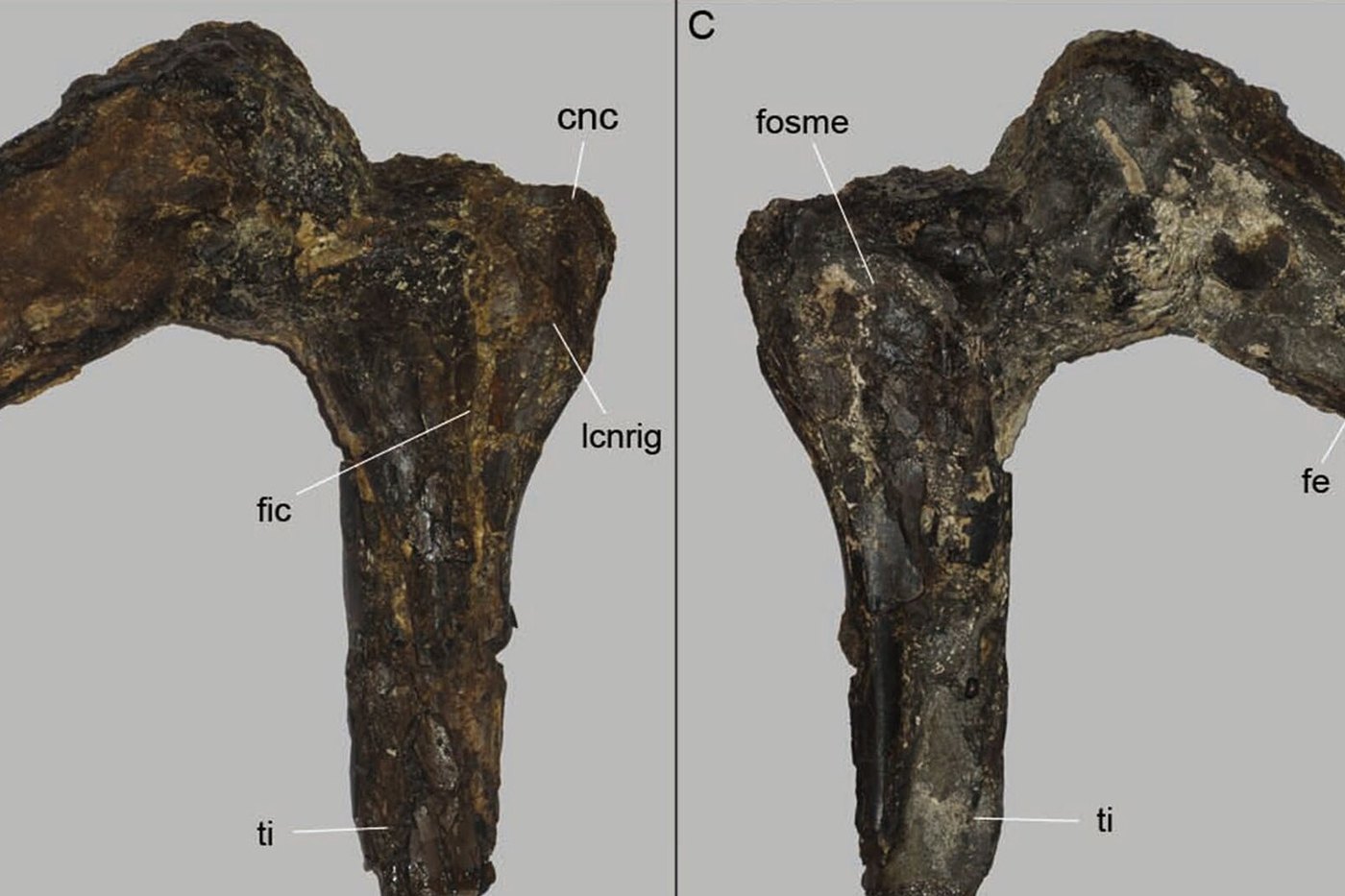
The study, published Monday in the Proceedings of the National Academy of Sciences, examined the hind-limb bones of Aratasaurus museunacionali, which were found in a mine in 2008 and are held by Brazil's National Museum. Electron microscope images showed small round structures in fine channels where blood vessels once ran, and chemical tests found heme and its breakdown products, as well as amino acids that make up collagen, The Guardian (opens in new tab) reported.
“Fossilised red blood cells with distinct chemistry related to heme have never been found in situ in any fossil, let alone a dinosaur,” said Kliti Grice of Curtin University in Western Australia, who led the team. The researchers suggest a manganese mineral called hausmannite, which formed in and around the cells, may have stabilized them before fossilization.
Mary Schweitzer of North Carolina State University, who has reported remnants of blood vessels and soft tissue in other dinosaur fossils, told The Guardian (opens in new tab) she is not convinced the structures are red blood cells. One reason is shape: she said the dinosaur's red blood cells should bulge outward around a nucleus, while the structures found are concave. She found the heme and collagen evidence more persuasive.
Grice cautioned that the work does not mean large molecules such as proteins or DNA survive in fossils. “Any extraordinary claim needs extraordinary analytical evidence,” she said.