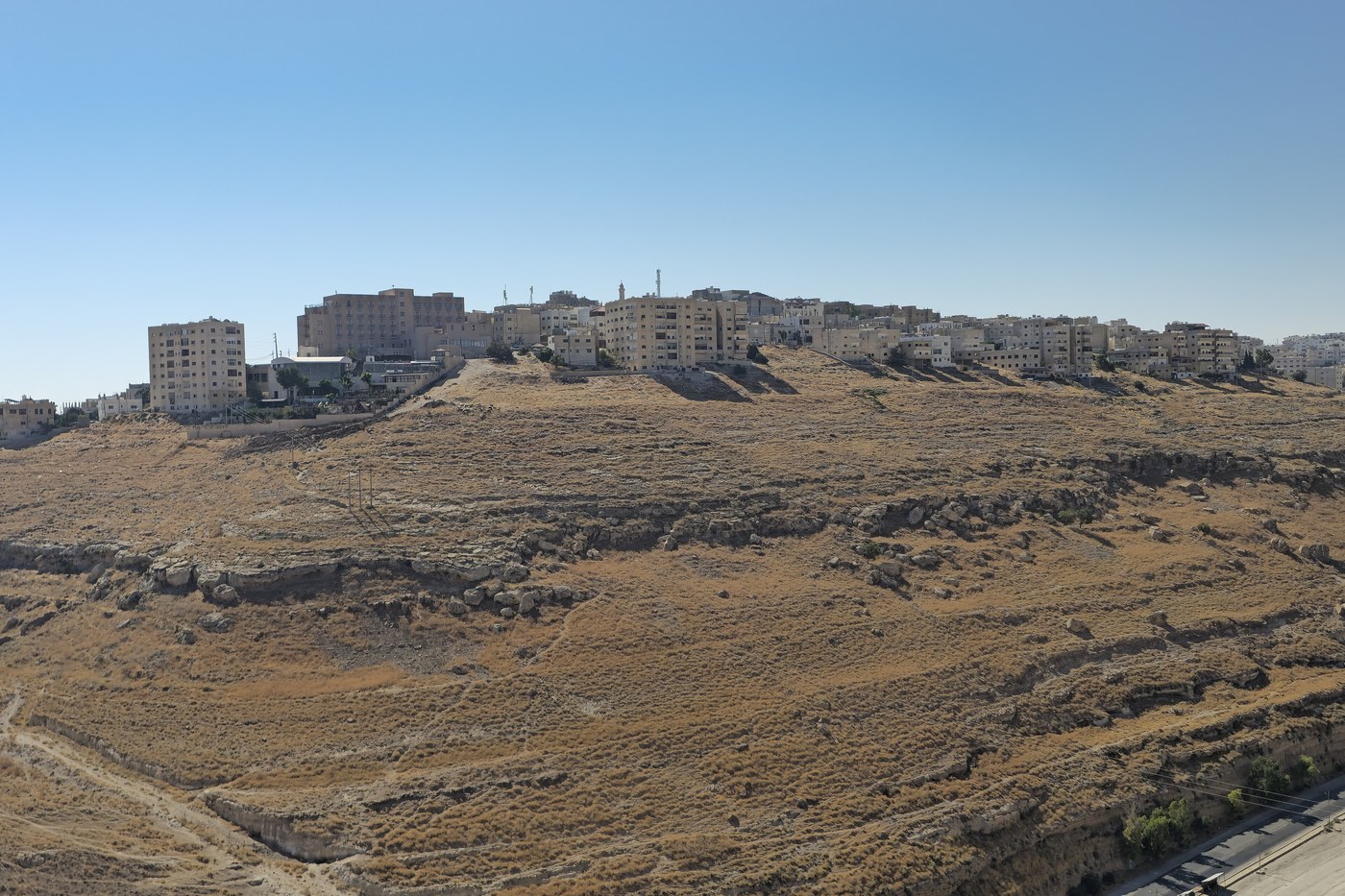
Gunmen opened fire during a funeral at a church in Jordan’s Karak governorate on Friday, killing seven people and wounding at least 34, Jordanian officials said. The attack hit a Greek Orthodox church in the town of Hmoud (also spelled Hamoud), about 180 kilometers (110 miles) south of the capital, Amman, the Associated Press reported.
The attackers arrived by car, entered the church grounds and fired on mourners before fleeing, the BBC reported. No one has claimed responsibility. Interior Minister Mazen al-Faraya described the attackers as a “group of extremists” and said authorities were working to catch them. Reuters reported that he said it was too early to say whether they had links to known groups inside or outside Jordan.
Security-camera footage aired on state television appears to show three armed men approaching the church and firing, according to the AP, Reuters and the BBC, which said it had verified the video. One witness, Khalid al-Mdanat, told BBC Arabic the attack lasted about 15 minutes. Another told the BBC: “I heard something as if a war had just started.” Public security director Maj. Gen. Obeidallah Maaytah said 27 of the wounded were still being treated, the AP reported.
King Abdullah II said Jordan would “confront the terrorist act that targeted Karak with the harshest penalties.” Reuters reported that he visited Karak hours after the attack. Officials first said seven had died, briefly revised the toll to six, then confirmed seven, the BBC said. Lebanon, Syria, Egypt and Oman condemned the attack, as did the grand imam of Al-Azhar, according to the AP.
Karak has a sizable Christian minority in majority-Muslim Jordan. Attacks of this kind are rare in the country. In 2016, gunmen killed 10 people, including seven officers, in a series of attacks in Karak that included the city’s Crusader castle, the AP reported.
Update: Health Minister Ibrahim Bdour said Friday evening that the number of wounded had reached 40, with two in critical condition, the Jordan News Agency (Petra) reported. Public security director Maaytah said those responsible would be arrested soon; no arrests had been announced. Prime Minister Jafar Hassan said the attack was the result of terrorist ideology and blind extremism, and Jordan declared three days of national mourning, the AP reported. U.N. Secretary-General António Guterres called the attack “especially heinous,” his spokesman said.
Update: The death toll from the attack stands at nine, with 34 wounded, Director of Public Security Maj. Gen. Obeidallah Maaytah told a news conference on Monday, according to the Jordan News Agency (Petra). Al Jazeera (opens in new tab), citing the Health Ministry, reported 40 injured, 27 of them still in hospital on Monday. The BBC reported that eight of the dead were buried beside the church on Sunday and the ninth was laid to rest near Amman on Monday.
Jordan’s Public Security Directorate said security forces found three suspects before dawn on Monday inside an abandoned house in Karak governorate. The directorate said they refused to surrender and opened fire, and that security forces returned fire, wounded all three and arrested them. No security personnel were hurt, and firearms and ammunition were found at the house, Petra and Reuters reported. A Jordanian government source told Al Jazeera (opens in new tab) the fighting lasted about three hours and that one suspect was in critical condition.
Maaytah named the detainees as Hazza’ Zaidan Muhammad, whom he described as the mastermind of the attack; his brother Mish’al Zaidan Muhammad; and Ahmad Sami Hussein, Petra reported. The Associated Press reported that Hussein is the brothers’ brother-in-law and that all three are Jordanian. Maaytah said they hold an extremist takfiri ideology, a term for Sunni militants, and told reporters: “They represent only themselves and do not reflect the views of the people of Karak Governorate or Jordanian society as a whole,” according to Rudaw (opens in new tab). The AP reported that he said they were not tied to any organized group. He said investigations were continuing ahead of a referral to the judiciary, Petra reported.
Later on Monday, the Jordanian armed forces said the Royal Jordanian Air Force had carried out “Operation Jordanian Deterrence - Hmoud,” striking what it called hideouts of terrorist organizations in southern Syria in retaliation for the church attack. The statement said the men behind the attack “have ties to the targeted terrorist organizations,” and that the strikes killed and wounded several militants and destroyed equipment, according to Petra. Anadolu reported that the army did not name the organizations, specify locations or give casualty figures. The armed forces’ statement differs from Maaytah’s description of the three men as representing only themselves.
Jordan’s statement said the operation was carried out in coordination with the Syrian government. Syria denied that. Syrian state media quoted a Daraa health official as saying five civilians were killed, including a 65-year-old man, SANA reported, as quoted by Rudaw (opens in new tab). Early on Tuesday, Syria’s Foreign Ministry said it had told Jordan it objected to strikes “without prior coordination” and expressed deep regret over the deaths in Daraa province. Daraa’s Health Directorate put the toll at seven dead, including an elderly man and three children, and four injured, Anadolu reported. The AP reported that Syrian state television described civilian casualties south of the village of al-Masmiyah in Daraa. The Syrian ministry said contacts with Jordan were continuing to establish the circumstances of the operation.
Update: On Tuesday, Jordanian government spokesman Mohammad Momani said initial assessments indicated the strikes had killed more than 20 Daesh operatives and destroyed a major weapons depot, Petra reported. He said the strikes were based on field intelligence about imminent threats, that Jordan avoids sites where civilians are known to be present, and that Jordan regrets the civilian casualties. He said the two countries would form a joint committee to follow up. Reuters also reported Jordan’s claim of more than 20 militants killed. The figure comes from Jordan alone and has not been confirmed by Syria or independently.
Syria’s Foreign Ministry condemned the strikes on Tuesday as “an unacceptable violation and breach of Syrian airspace without any prior coordination,” France 24 (opens in new tab) reported. Syria’s civil defense said it recovered seven bodies in Daraa and Sweida provinces, five of them members of one family, including three children and a woman, France 24 (opens in new tab) and Al Jazeera (opens in new tab) reported. That is more than the five civilians Syrian state media had reported the night before. Reuters reported that Syria also said it was coordinating with Amman and would set up a joint security committee to strengthen border security. Al Jazeera (opens in new tab) reported that Syrian customs authorities closed the Nassib border crossing with Jordan on Tuesday.
Reuters said statements in recent days by Jordanian authorities that there had been no prior planning of the church attack “have added to the confusion, appearing at odds with Jordan’s justification for the cross-border strikes.” Reuters reported on Tuesday that no group had claimed responsibility for the attack, although Jordan said the militants it targeted in Syria were members of Daesh. Al Jazeera (opens in new tab)’s Tuesday explainer said ISIL had claimed responsibility, which conflicts with Reuters’ report; neither report quotes a statement from the group.