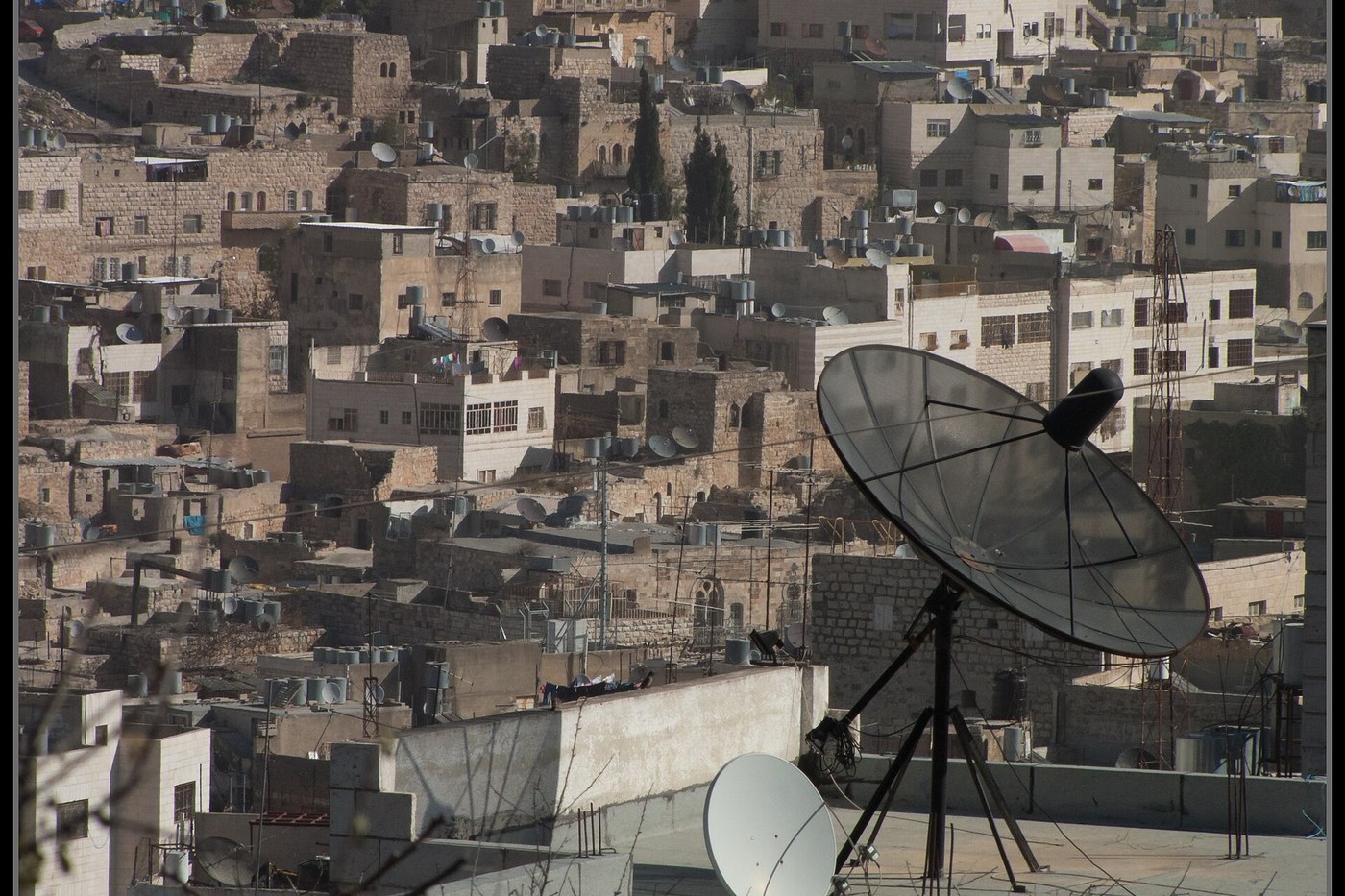
Two Israeli soldiers were killed Friday when gunmen opened fire near a military checkpoint outside Hebron in the occupied West Bank, the Israeli military said. Israeli forces killed the two Palestinian attackers. Israel said both were from Hebron and were armed with an M16 rifle and a handgun, NBC News (opens in new tab) reported. Three more soldiers were lightly injured, the military said.
Prime Minister Benjamin Netanyahu ordered Hebron sealed and told the military to prepare for a “full lockdown” across the West Bank starting Friday, NBC News (opens in new tab) reported. Soldiers would go “house to house” in the areas the attackers were believed to come from, he said. “We are prepared for a large-scale operation in Judea and Samaria,” Netanyahu said, using a name some Israelis use for the West Bank. He blamed Hamas and said the group was “planning a major attack aimed at murdering innocent civilians,” without giving details.
Defense Minister Israel Katz said, “Every clan neighborhood in Hebron from which the terrorists emerged today will be evacuated of its residents, and the terror infrastructure in the neighborhood will be addressed and dismantled,” according to NBC News (opens in new tab). National Security Minister Itamar Ben-Gvir called for the Palestinian Authority to be dismantled. Hamas, Palestinian Islamic Jihad and the Popular Front for the Liberation of Palestine praised the attack, Al Jazeera (opens in new tab) reported.
U.N. spokesperson Stéphane Dujarric said Secretary-General António Guterres was deeply concerned by the closures and by reports of home demolitions in Hebron. “Those closures severely restrict Palestinians’ freedom of movement, access to basic services and livelihoods,” he said, according to UN News (opens in new tab). Mayy El Sheikh of the U.N. human rights office said the lockdown followed “a pattern of collective punishment.” She said Hebron’s entrances and exits had been closed and the Ibrahimi Mosque shut for Friday prayers. UN News (opens in new tab) said it is the fourth time in a month that Israel has imposed restrictions across the territory.
The attack comes days before Tuesday’s Israeli election and during the olive harvest, when settler violence has surged. The U.N. human rights office has documented more than 160 settler attacks in the first two weeks of October, UN News (opens in new tab) reported.
Since the attack, Palestinian officials say, more than 2,600 people have been forced from their homes in Hebron as Israel pressed its operation in the city. The Israeli military says it operated in more than 400 locations over the weekend and arrested 40 Palestinians it said were affiliated with Hamas or Palestinian Islamic Jihad, CBS News (opens in new tab) reported. It also says no civilians were forced to leave.
“More than 2,670 Palestinians have been forcibly displaced from their homes in Hebron by Israeli occupation forces, the majority of them women, children, and elderly people, according to data from Hebron Municipality,” the Palestinian prime minister’s office said on X on Sunday, AFP reported. The Palestinian news agency Wafa put the number at around 2,500 people from the al-Jilda and Ain Deir Baha areas, Euronews (opens in new tab) reported. Israeli Defense Minister Israel Katz said “about 2,000” people had been displaced, Al Jazeera (opens in new tab) reported.
“To reduce the risk to civilians, civilians were permitted to temporarily leave the area through designated screening points. No civilians were forced to evacuate,” the Israeli military said in a statement, Euronews (opens in new tab) reported. The military confirmed that a number of buildings in Hebron had been demolished and said they had posed a “security threat.” It said the other demolished structures “were also built illegally, and their demolition was carried out in accordance with international law.”
Katz told the public broadcaster Kan that residents “will not be allowed to return to their neighbourhood until we’ve finished dealing with all the Hamas issues in Hebron,” according to Al Jazeera (opens in new tab). Hebron Mayor Yousef al-Ja’bari told Al Jazeera (opens in new tab) the city and several neighboring villages were under a complete blockade. “People cannot reach or enter the city, and they cannot leave it. The blockade has affected every aspect of life,” he told CBS News (opens in new tab). The Palestinian Authority called the actions “collective punishment,” Al Jazeera (opens in new tab) reported. The Israeli human rights group B’Tselem condemned what it called plans to forcibly displace residents and carry out widespread destruction, Euronews (opens in new tab) reported.
Separately, the Israeli military said on Sunday it would bar most Palestinian workers from entering most areas of the West Bank on Sunday and Monday and close all land crossings on Tuesday, the day of Israel’s general election, Al Jazeera (opens in new tab) and Euronews (opens in new tab) reported. Al Jazeera (opens in new tab) reported that Prime Minister Benjamin Netanyahu has suggested a larger operation is coming, on a scale not seen since Israel occupied the West Bank in 1967.
Six Israelis have been killed in West Bank attacks this year, and 112 Palestinians have been killed in the same period, according to the Palestinian Health Ministry, CBS News (opens in new tab) reported.
Update, Oct. 27: U.N. human rights chief Volker Türk said in a statement issued in Geneva on Monday that Israel’s operation in Hebron since Friday had forcibly displaced “over 2,000 Palestinians,” demolished homes and commercial property and deprived residents of the ability to move freely. “Collective punishment is a grave violation of international law. Threats to empty and erase entire neighbourhoods also raise serious concerns of ethnic cleansing,” he said. He said those displaced must be allowed to return home and that Israel must ensure compensation and reparation for unlawful evictions and demolitions. The statement was published by the U.N. human rights office and reported by UN News (opens in new tab) and Arab News. It does not say who counted the displaced.
UN News (opens in new tab) reported the same day that the number of Palestinians forced from their homes had “passed 3,000,” and that the U.N. aid coordination office, OCHA, said aid partners were supporting local authorities in Hebron to meet the needs of “more than 3,000 people evacuated by Israeli forces since Friday.” Arab News, citing AFP, reported that Hebron’s municipality said in a statement Monday that 3,189 people, including more than 200 infants, had been displaced. Al Jazeera (opens in new tab) reported that Hebron Governor Khaled Dudin put the total across the wider governorate at 3,171 people in 488 families, and that Mayor Yousef al-Jabari said 3,043 of them are from within Hebron city limits.
The figures differ in who counted and when. The 2,670 figure cited above is from Hebron Municipality data released by the Palestinian prime minister’s office on Sunday. The Guardian reported from Hebron that the municipality said 370 families, nearly 2,000 people, had been displaced by the army sweep through Ein Deir Baha, one of the affected areas. Türk’s “over 2,000” is stated as a minimum, with no counter or date beyond “since Friday.” OCHA’s “more than 3,000” counts people it says were evacuated by Israeli forces since Friday, and the municipality’s 3,189 and the governor’s 3,171 are Monday counts, higher than the Sunday ones. The governor’s count covers the wider governorate, while the mayor’s 3,043 covers Hebron city only. The U.N. accounts do not say whether their figures draw on the municipality’s counts.