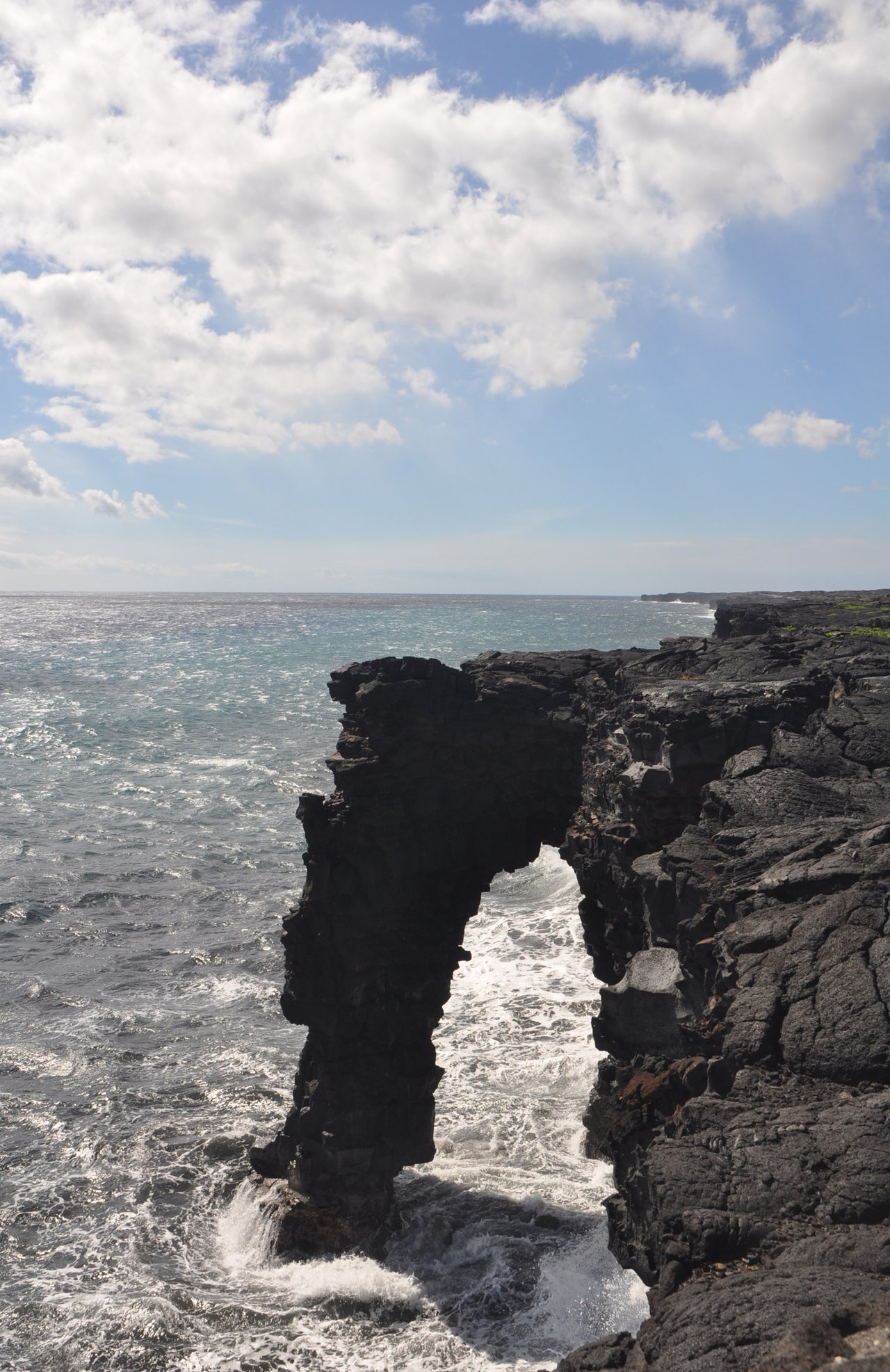
The Hōlei Sea Arch in Hawaiʻi Volcanoes National Park has collapsed into the Pacific Ocean, the National Park Service said in an Oct. 1 news release. The 90-foot arch was still standing on Wednesday, Sept. 23, but had collapsed by Sunday night, Sept. 27. The exact time is unknown and could have been while the park was temporarily closed during Tropical Storm Nolo, the park said. Most of the park had been closed from Thursday through early Sunday because of wind and rain threats from Nolo, the Honolulu Star-Advertiser (opens in new tab) reported.
The arch formed in a basalt lava flow that erupted more than 550 years ago and was shaped by pounding waves, the Star-Advertiser reported, citing the park service. “It will not be here for ever,” the U.S. Geological Survey said in a 2014 description quoted by the Guardian (opens in new tab). “Every day the ocean crashes against the pillar of the arch, eroding it a little more. One day, it will be gone.” The Guardian (opens in new tab) also reported that Hawaiʻi has had an unusually high number of severe storms this year, including hurricanes Lala in August and Lowell in early September, and that experts say the pattern is consistent with El Niño years.
“The coastline flanking the sea arch has shown signs of instability for years,” the park service said. Earthquakes during the 2018 Kīlauea eruption and summit collapse damaged the cliffs near the arch. In January 2020, new cracks and instability led the park to close the original viewing area, and a safer one farther from the cliff edge opened in March 2020. Later that year, massive surf from Tropical Storm Darby broke off a chunk of rock from the lower part of the arch.
Park officials urged visitors to stay back from the unstable coastal cliff edges, which drop vertically into the ocean. They said photos on social media show people entering the closed area near where the arch stood, “putting themselves and first responders at great risk of falling and drowning off the rough, wave-swept coast.”