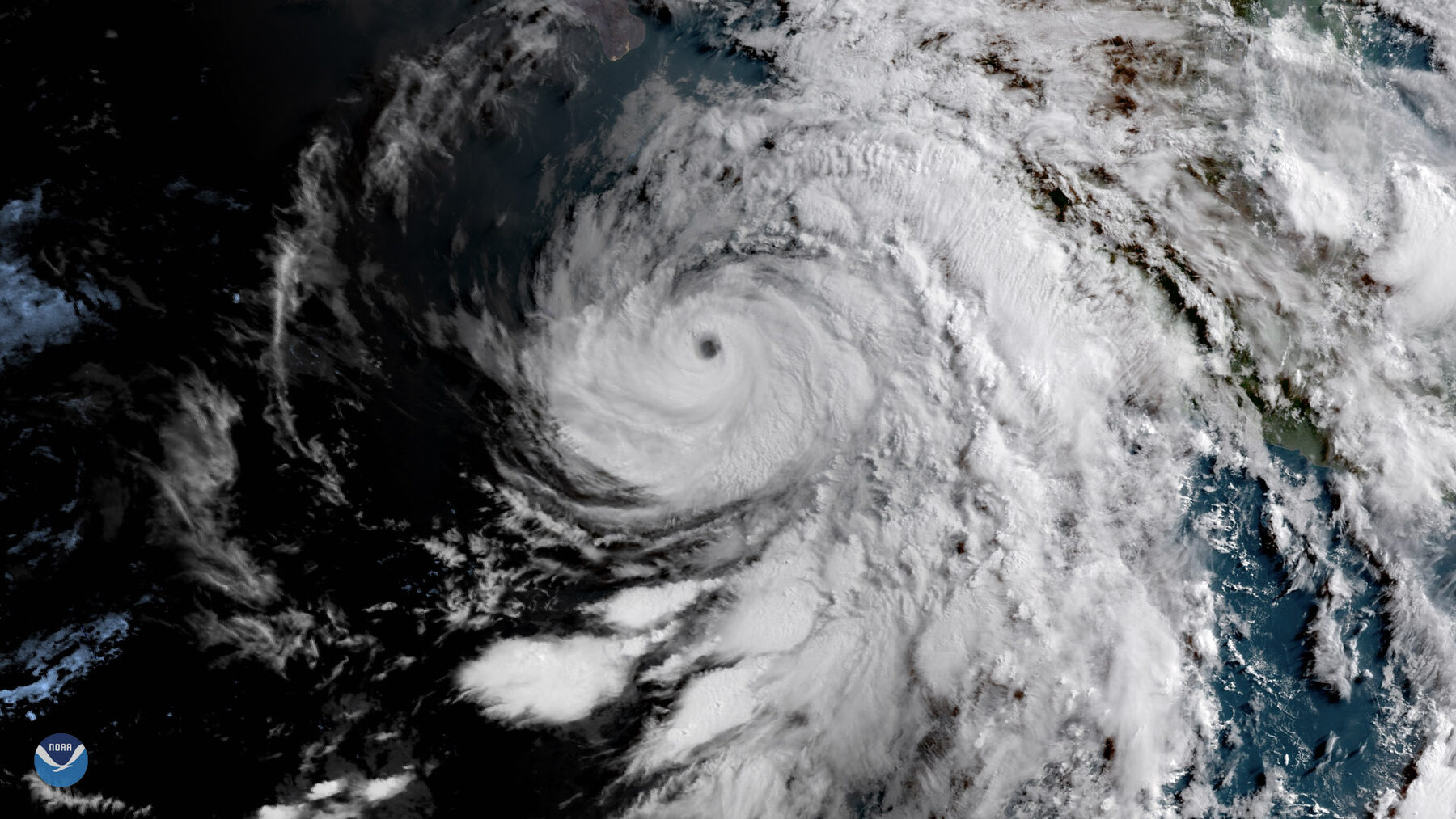
Hurricane Rachel strengthened Thursday morning about 230 miles south of the southern tip of Baja California, with maximum sustained winds near 105 mph, the National Hurricane Center said in its 8 a.m. MST advisory. The storm was moving west-northwest near 6 mph, with a minimum central pressure of 964 millibars, according to the center. The Associated Press reported that Rachel had become a Category 2 hurricane.
There are no coastal watches or warnings in effect, the hurricane center said. The government of Mexico discontinued all coastal watches and warnings Wednesday morning, according to the hurricane center’s 8 a.m. MST advisory that day. The hurricane center warned that swells from Rachel will reach the coast of west-central Mexico and the Baja California Peninsula through the end of the week. “These swells are likely to cause life-threatening surf and rip current conditions,” the advisory said.
Mexican authorities said Thursday they remained on alert for very heavy rain in Baja California Sur, Sinaloa and Jalisco, with the possibility of landslides, rising rivers and flooding in low-lying areas, the AP reported. On Wednesday, schools were closed as a precaution in 30 municipalities in Jalisco, according to the AP.
The hurricane center forecasts continued strengthening for about the next day, with winds peaking near 120 mph Friday, then gradual weakening. Its forecast discussion said moderate wind shear has kept Rachel’s strengthening gradual, and that drier air later in the forecast period should cause it to weaken. A ridge building to the north is expected to steer the storm westward at a faster pace through the end of the forecast period, according to the discussion. The AP, in a report published by NBC News early Thursday, said the storm was far offshore and posed no threat to land, that it was forecast to move away from mainland Mexico and pass south of the Baja California peninsula, and that it could become a major hurricane with sustained winds topping 111 mph.
Rachel became a tropical storm on Sunday, Sept. 27, and strengthened into a hurricane late Tuesday, Sept. 29, according to hurricane center advisories. It arrives days after Hurricane Polo made landfall overnight Monday on the Baja California peninsula as a Category 3 hurricane, according to the AP. Experts have attributed the unusually busy Pacific season to El Niño, which has warmed waters and produced wind patterns that feed hurricanes, the AP reported.