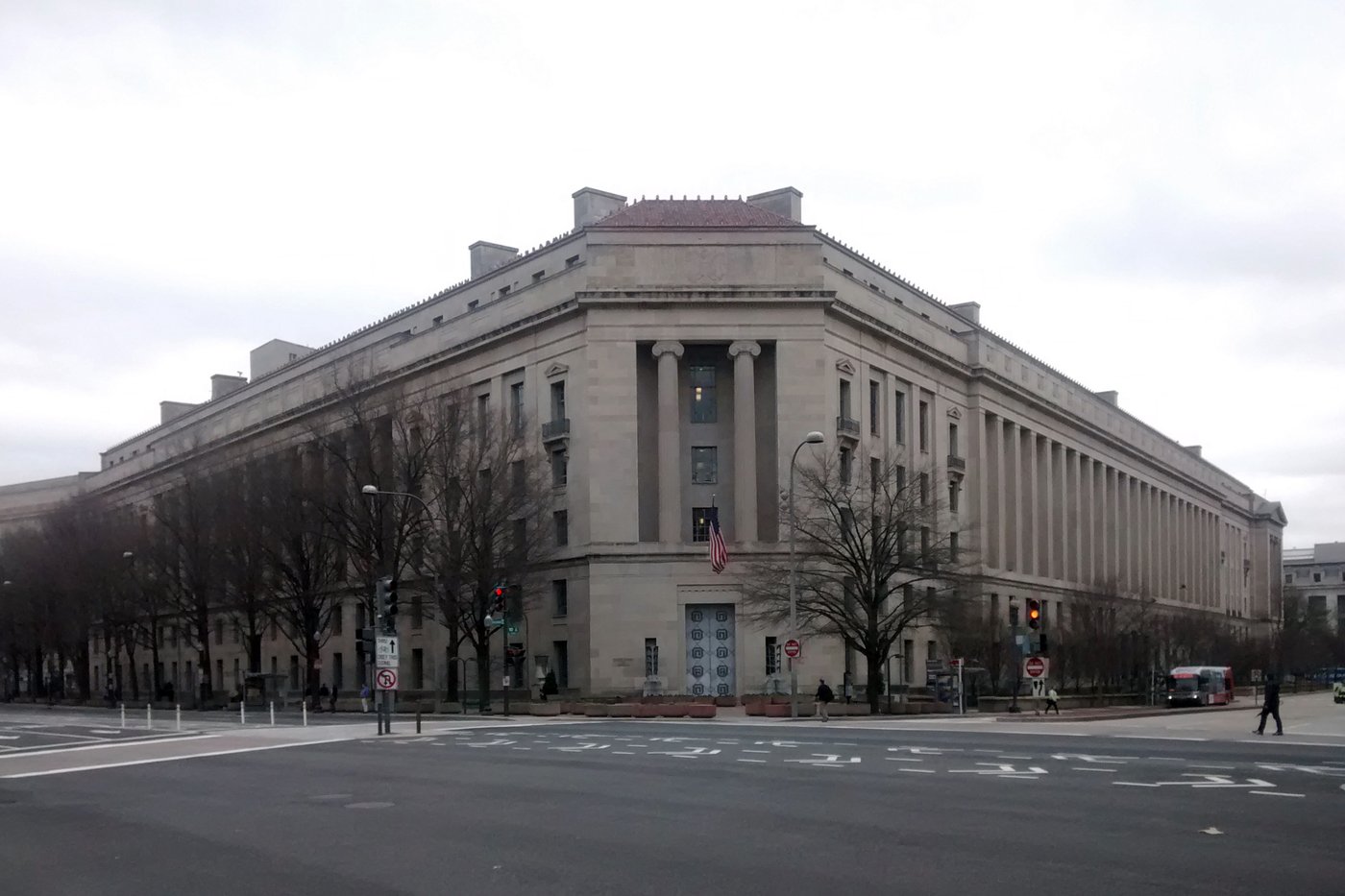
Two federal judges in Washington ruled on Monday, the day before the midterm elections, that the Trump administration may not use lists of suspected noncitizen voters to press states into setting aside or not counting those ballots.
U.S. District Judge Tanya Chutkan barred the Justice Department and the Department of Homeland Security from sending such lists to states and from asking election officials to separate or not count the ballots of voters on them, Reuters reported. The suit was brought by voting rights and privacy advocates under the Privacy Act. Chutkan said the data the agencies relied on may not be reliable, according to Reuters.
In a separate case, U.S. District Judge James Boasberg blocked federal demands that California segregate roughly 20,000 ballots. “As Congress has not provided otherwise, California may decide for itself what procedures to use for verifying the citizenship of registered voters and for deciding whether to count their mail-in ballots,” Boasberg wrote, according to Bloomberg Law (opens in new tab). “As the Executive Branch lacks authority to unilaterally impose its preferred procedures, the Court will enjoin its attempt to do so here.”
In his 20-page decision, Boasberg also wrote that “The Executive Branch has likely violated the Constitution’s Elections Clause, which commits authority over election rules to the states and Congress alone,” the Washington Examiner (opens in new tab) reported. That case, Trujillo v. DHS, was brought by plaintiffs including the Coalition for Humane Immigrant Rights, with the UCLA Voting Rights Project among their lawyers, according to Bloomberg Law (opens in new tab).
The Justice Department argued that its letters to states were meant to enforce the federal ban on noncitizen voting and were not a policy that courts could review, according to the reports. The Justice Department and DHS did not respond to Bloomberg Law (opens in new tab)’s requests for comment.
Bloomberg Law (opens in new tab) reported that an analysis by the UCLA project found “at least 22 full matches and 66 additional near-certain matches” between the federal list and records of people the immigrant rights group knows to be citizens.
The rulings came the same day the Supreme Court denied a separate Justice Department request to make California set aside the same group of mail ballots. That case, United States v. California, began as a Justice Department lawsuit in federal court in California.