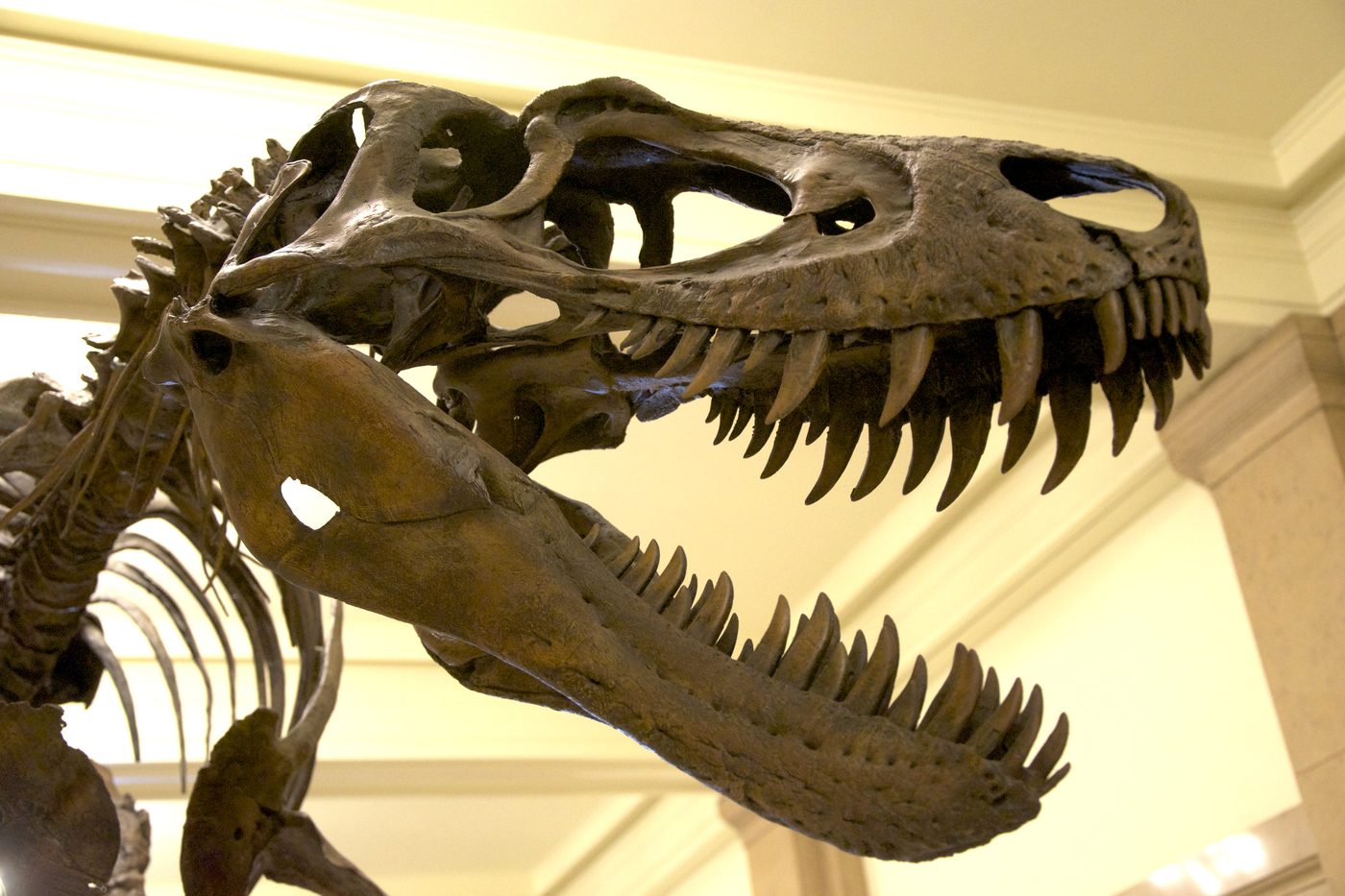
A mounted Nanotyrannus skeleton nicknamed Jodi sold at Sotheby’s (opens in new tab) in New York on Tuesday for $47.3 million (£35.5 million), the BBC and CNN reported. Bidding lasted 12 minutes among six contenders, and the buyer’s identity has not been disclosed. It is the second-highest price paid for a dinosaur fossil at auction, behind the Tyrannosaurus rex known as Gus, which sold for $50.1 million in July, the BBC said. Third is a Stegosaurus named Apex, sold by Sotheby’s (opens in new tab) for $44.6 million in July 2024.
CNN reported that the sale blew past an estimate of $6 million to $9 million, while the BBC said the skeleton was expected to fetch at least $9 million. The specimen is about 10 feet tall, the BBC said, and is made up of about 191 bone elements and a “virtually complete” skull, according to Sotheby’s (opens in new tab) as quoted by CNN. CNN reported that missing bones were replaced with custom 3D-printed and sculpted elements, and that the fossil was offered with “full rights,” which CNN said means its new owner can make replicas and sell them to museums or collectors.
Jodi was discovered in 2019 by Montana rancher Jodi Pierson, after whom it is named, in the Hell Creek Formation, and was excavated by commercial paleontologist Clayton Phipps, CNN reported. It was shown at the Frieze Masters fair in London in October 2023 as a juvenile T. rex, before the Nanotyrannus genus was classified, the BBC said. Sotheby’s (opens in new tab) describes it as one of only three relatively complete Nanotyrannus skeletons known; the others are the “Dueling Dinosaurs” fossil in North Carolina and a specimen named Jane in Illinois, CNN reported.
Whether Nanotyrannus is its own genus has been contested. The BBC said researchers confirmed last October that it is distinct from T. rex, in a paper by Lindsay Zanno and James Napoli. CNN said its existence is “hotly debated” and that researchers have only recently tipped the scales toward treating it as a distinct dinosaur.
The sale renewed an argument over private ownership of fossils. Steve Brusatte of the University of Edinburgh told CNN in an email: “It’s harrowing to think it could disappear into the vaults of a collector rather than displayed on a museum where it can wow and inspire kids and families and the public at large.” David Hone of Queen Mary University of London told CNN he would be “very surprised if the specimen ended up in a public collection and available for study,” and that until then it is “effectively outside of science.”
Megan Jacobs, a palaeontologist at the University of Portsmouth, told BBC Radio 4’s Today programme there are two sides to the debate. “I don’t begrudge the people involved for wanting to sell it for such a large amount of money,” she said, adding that a lot of time, effort and money went into excavating such specimens.