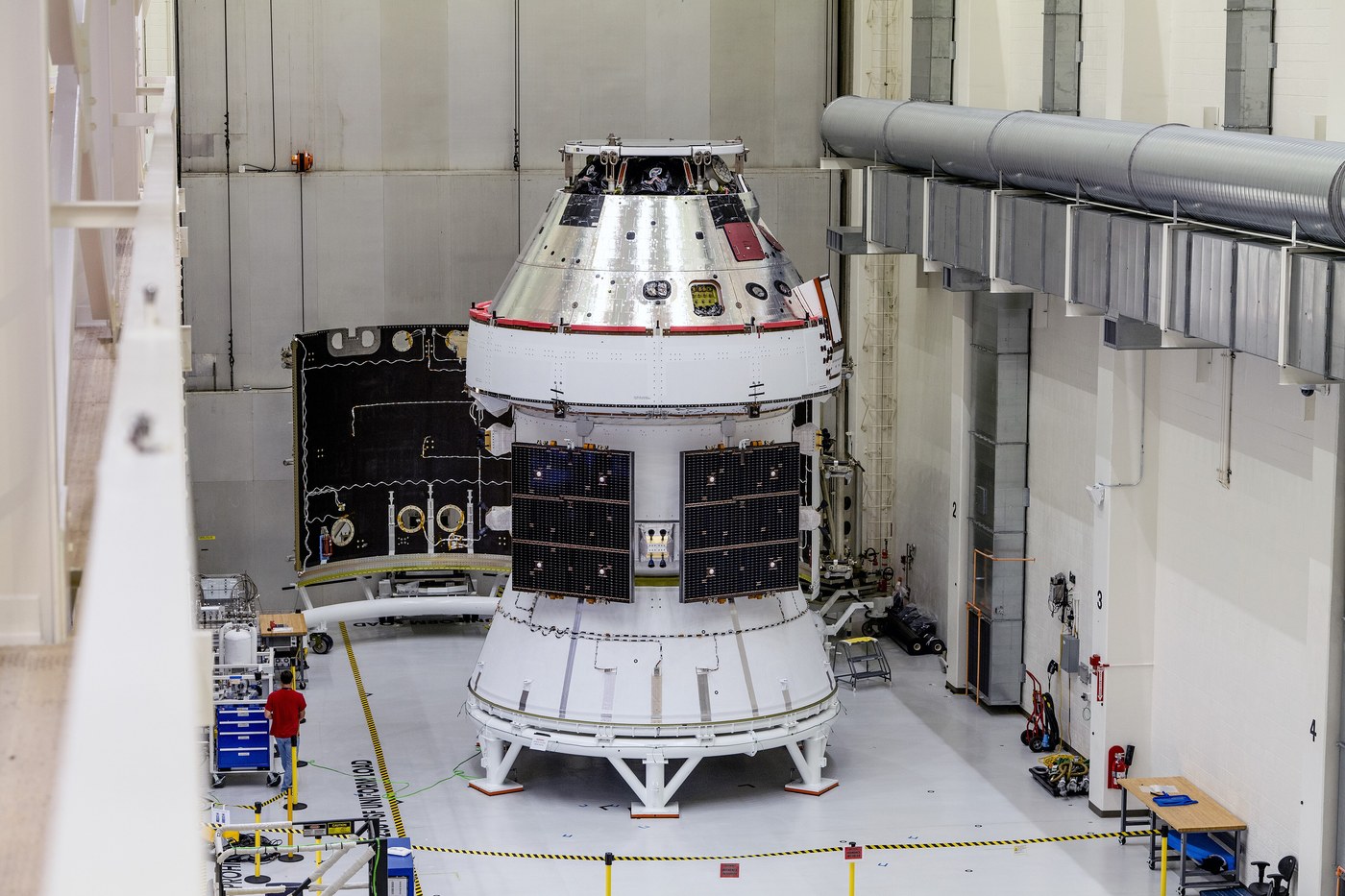
NASA (opens in new tab) on Friday laid out a detailed plan for Artemis III, a crewed mission to low Earth orbit that will test docking with the two commercial lunar landers NASA (opens in new tab) is counting on for its return to the Moon. Officials said at a briefing at Kennedy Space Center in Florida that the agency is still targeting summer 2027 for the launch. Aerospace America (opens in new tab) reported that a chart shown at the briefing put the window between May and September.
Under the plan, Blue Origin’s New Glenn rocket would first launch a Blue Moon lander test article. NASA (opens in new tab)’s Space Launch System would then send astronauts Randy Bresnik, Andre Douglas and Frank Rubio of NASA (opens in new tab) and Luca Parmitano of the European Space Agency into orbit aboard Orion, Space.com (opens in new tab) reported. Orion would dock with Blue Moon on the third day, and the crew would open the hatch, enter the lander and test its life support and other systems over two days.
Around the sixth day, SpaceX would launch a Starship lander test article, which would dock with Orion for about two hours. “The crew will not enter the Starship during the mission, but it gives us critical data,” Artemis program manager Jeremy Parsons said, according to Space.com (opens in new tab). He said the mission is planned to last 14 days and could run as long as 17.
NASA (opens in new tab) said it is still working toward Artemis IV, the first Artemis landing, in 2028, and has not decided which lander will fly it. “Regardless of who goes first, both providers are planning for lunar landing missions in 2028,” Parsons said. Ars Technica (opens in new tab) reported that the revised plans call for Orion to dock with SpaceX’s lander in high Earth orbit before heading to the Moon, and for Blue Origin’s approach to use four New Glenn launches without refueling between spacecraft.
“This is an achievable path we are on right now,” NASA (opens in new tab) Administrator Jared Isaacman said, according to Ars Technica (opens in new tab). Space.com (opens in new tab) noted that Isaacman told staff in an internal memo last month that Artemis III was about 90 days behind schedule. Parsons said Blue Origin hopes to restart pad operations in November after a New Glenn rocket exploded on the pad in May, Aerospace America (opens in new tab) reported.