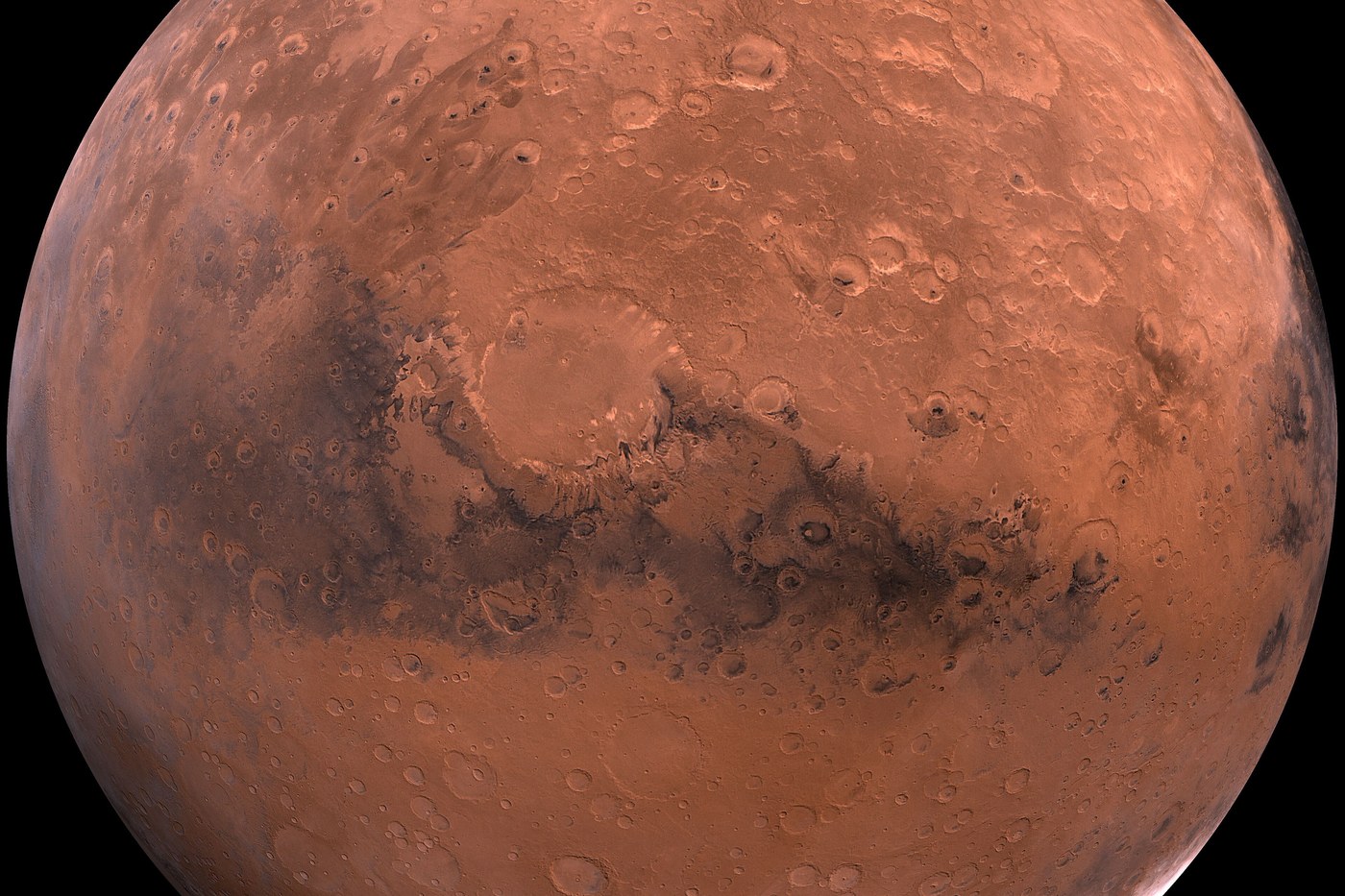
NASA (opens in new tab)'s second ESCAPADE spacecraft, nicknamed Gold, completed a powered Earth flyby at about 6 a.m. EST on Monday, Nov. 9, coming within about 650 miles (about 1,050 kilometers) of Earth, NASA (opens in new tab) and SpaceNews (opens in new tab) reported, putting the twin probes on course for Mars.
Gold followed the first spacecraft, Blue, which made a similar approach at about 5 a.m. EST on Nov. 7 at about 1,000 miles (SpaceNews (opens in new tab) gave about 1,600 kilometers). Each craft fired its engines for about nine minutes during the close approach, NASA (opens in new tab) said. "This is the first time NASA (opens in new tab) has used a powered Earth flyby to propel a spacecraft toward Mars, and we've now executed this maneuver twice, flawlessly, in just two days," said Asal Naseri, acting associate flight director for the Heliophysics Division at NASA (opens in new tab) Headquarters, in a statement also quoted by SpaceNews (opens in new tab).
The pair launched on Nov. 13, 2025, and spent about a year in a loiter orbit near the Sun-Earth L2 point before the flybys, NASA (opens in new tab) said. Mars orbit insertion is planned for Sept. 7 and 9, 2027, with science operations expected to begin in June 2028. The mission is meant to study how the solar wind strips Mars's atmosphere. The University of California, Berkeley's Space Sciences Laboratory leads the mission; Rocket Lab built the spacecraft.
SpaceNews (opens in new tab), citing principal investigator Rob Lillis at a Nov. 9 meeting of the Mars Exploration Program Analysis Group, reported that he called the burns "critical in the same way a Mars orbit insertion burn is."