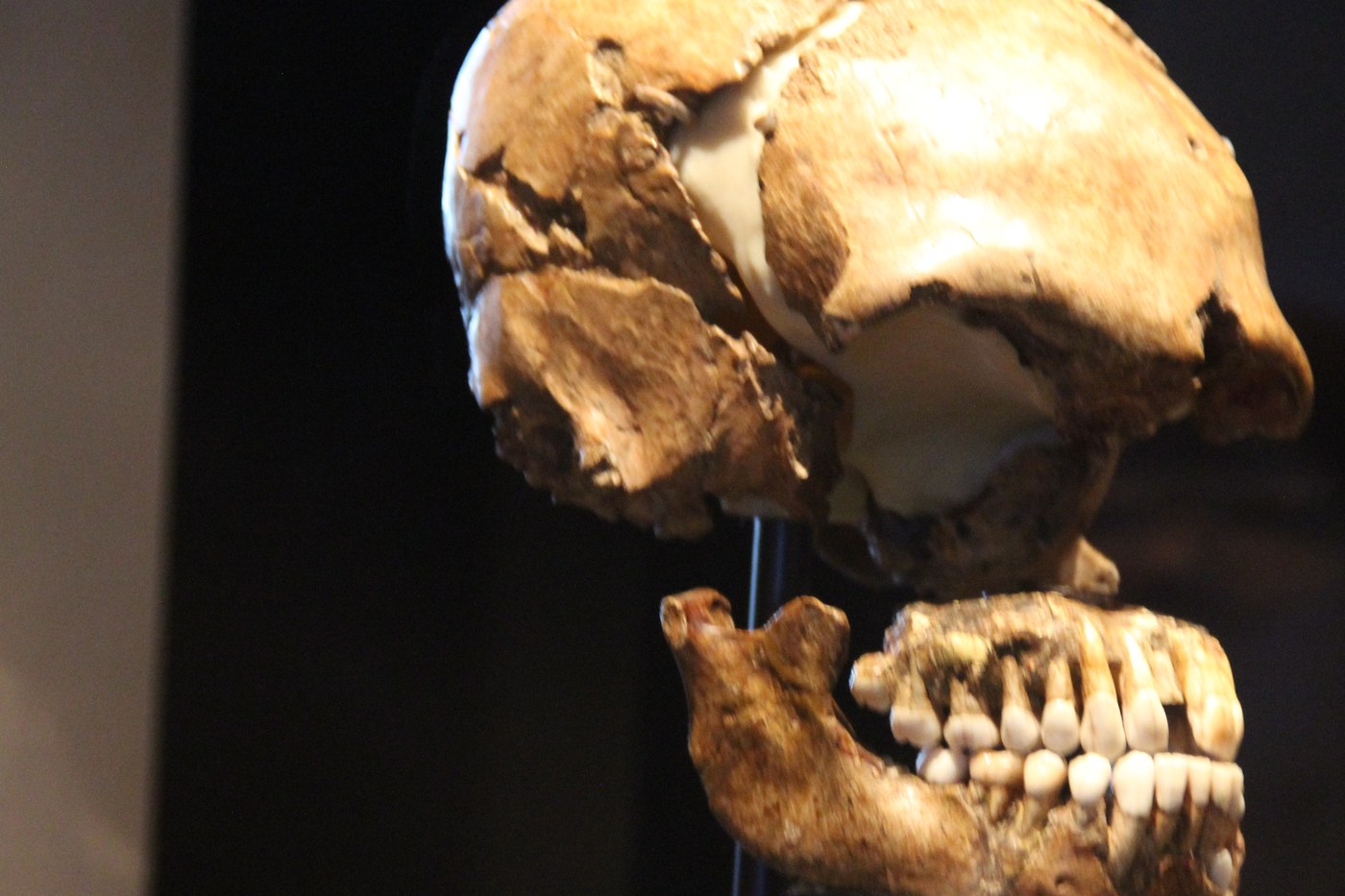
A stretch of Neanderthal-derived DNA still found in some people today is associated with slightly less volume in the cuneus, a part of the visual cortex, and with a lower risk of schizophrenia, researchers reported on Monday in the Proceedings of the National Academy of Sciences. Nature (opens in new tab), in a news article on the study, said each copy of the variant was associated with 0.85 cubic centimeters less cuneus volume, which it described as the largest known genetic effect on that region, and that people who carry the variant also have a reduced risk of schizophrenia.
The variant sits in a 59.7-kilobase Neanderthal-derived segment, Nature (opens in new tab) reported. Scientific American (opens in new tab) said the segment "correlates with a nearly 10 percent lower risk of developing schizophrenia." ScienceAlert (opens in new tab), describing the same work, said people who carry the variant had slightly lower odds of schizophrenia — around 5 percent lower per copy, or nearly 10 percent for people with two copies — and that the researchers found no association with general cognitive ability. The percentage figures did not appear in Nature (opens in new tab)'s account and are attributed only to those two outlets.
The study reports associations, not a showing that the variant causes a smaller brain or protects against schizophrenia. Nature (opens in new tab) noted that Neanderthals tended to have slightly larger occipital lobes, a pattern that runs counter to a simple story in which the inherited variant would be expected to enlarge that region in people living today.