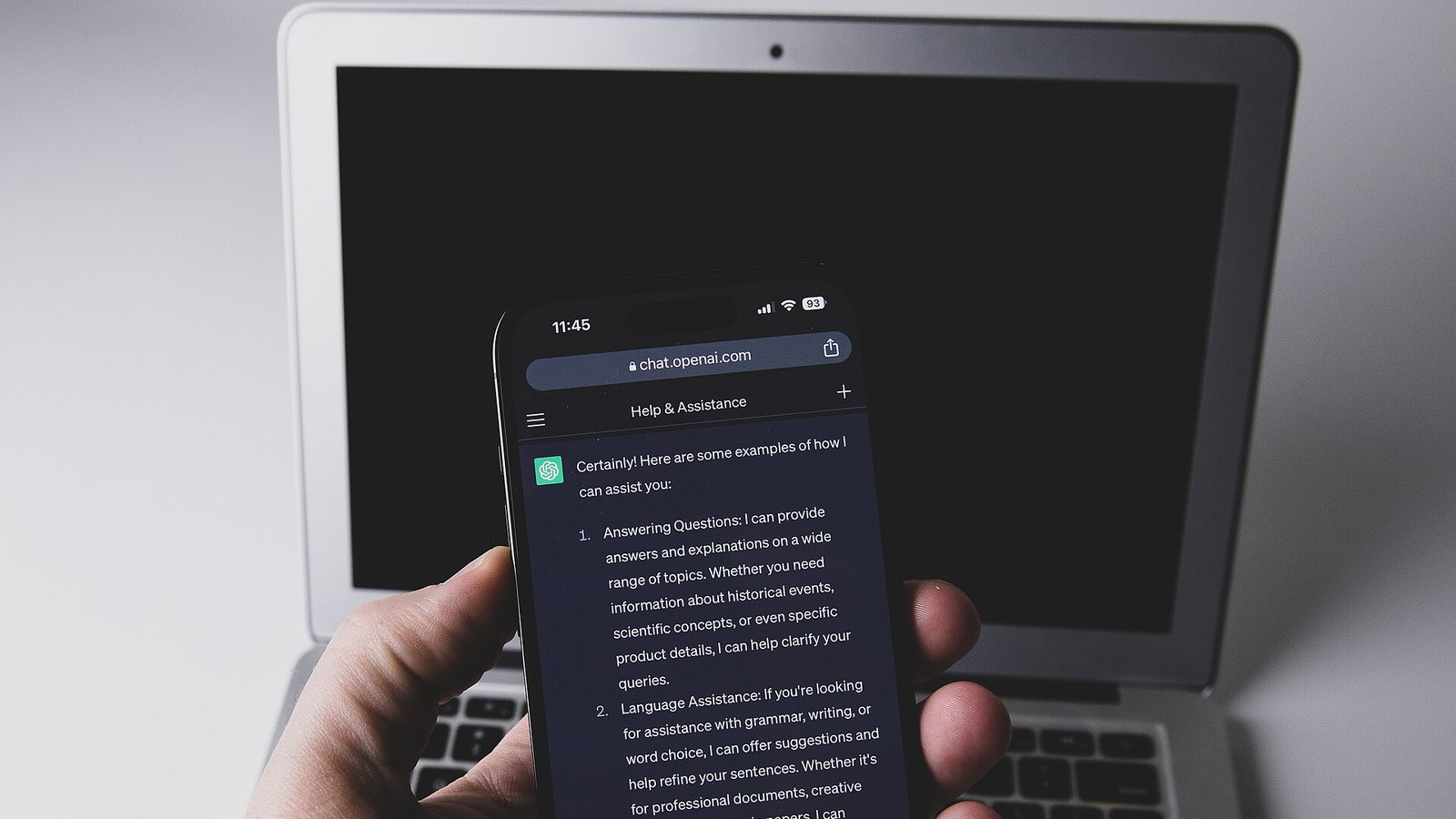
OpenAI (opens in new tab) said Monday it will add an invisible watermark to text generated by ChatGPT and Codex for eligible users in the European Union over the coming weeks, in response to the EU AI Act’s requirement that generated text be identifiable in a machine-readable way. The company said it is not making the watermark a global default at launch.
Starting Monday, API customers anywhere can opt in to watermarked text for select models; the feature stays off by default in the API, OpenAI (opens in new tab) said. It is also opening applications for its detector, which will initially be available only to approved researchers and expert organizations on a case-by-case basis. OpenAI (opens in new tab) said it is not releasing the detector publicly because of the risk of missed watermarks and false positives.
The technology, called textGrain, adds what OpenAI (opens in new tab) describes as an invisible statistical signal to the model’s word choices. The company said textGrain matched or exceeded other approaches it tested, including Google DeepMind’s SynthID for text, which The Verge (opens in new tab) noted is also the basis of the watermarking Anthropic announced in August.
OpenAI (opens in new tab)’s own figures show limits. At a 1% target false-positive rate, the detector caught watermarks in about 80% of 200-token passages and about 95% of 400-token passages for content such as psychology, with substantially lower rates for mathematics. Replacing 10% of words with synonyms cut detection from about 92% to 66%; replacing 25% cut it to 17%.
The company said a watermark does not identify the user, measure human contribution, establish ownership or verify accuracy, and that the absence of a watermark does not prove a human wrote the text. Bloomberg Law (opens in new tab) also reported the EU rollout.