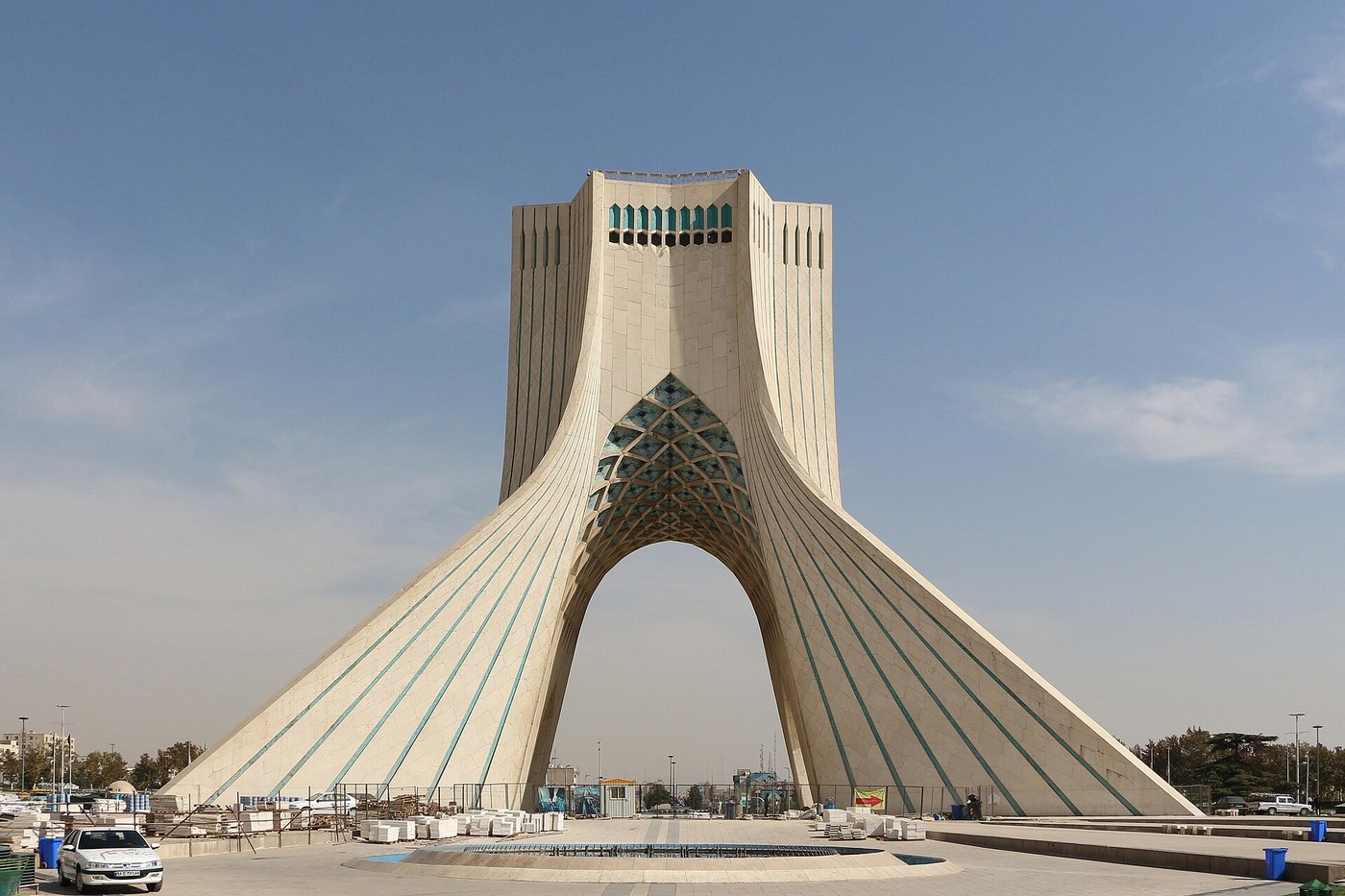
Senior officials from Saudi Arabia, Pakistan and Turkey met Iran’s leaders in Tehran on Monday in an effort to head off renewed fighting in the Iran war. The meeting ended without concrete announcements. The participants “agreed to continue discussions,” according to Iranian state media, AFP reported. A joint statement carried by Anadolu said Türkiye, Saudi Arabia, Pakistan and Iran “agreed to continue talks to strengthen cooperation on regional issues, including peace and security,” and the Associated Press reported that no details were given on when or where further meetings would take place.
Saudi Defense Minister Prince Khalid bin Salman, Pakistan’s army chief, Field Marshal Asim Munir, and Turkish intelligence chief Ibrahim Kalin met Iranian President Masoud Pezeshkian and Foreign Minister Abbas Araghchi, and held talks hosted by Mohsen Rezaei, secretary of Iran’s Supreme National Security Council, according to Anadolu and Dawn (opens in new tab). It was the first joint visit to Tehran by the three countries since they formed the Mecca defense pact in August, AFP reported.
Rezaei called the talks “very good,” according to Iranian state television, as quoted by AFP. “I feel that a new atmosphere is emerging in the region ... I sensed a very positive atmosphere in the discussions among the gentlemen,” he said. He said the participants agreed that security in the region “should be achieved by the countries themselves, and that we must prevent any kind of foreign intervention.” Pezeshkian urged Islamic countries to “stand together and adopt a coordinated position,” Dawn (opens in new tab) reported, citing a statement on the presidential website.
Saudi Deputy Minister for Public Diplomacy Rayed Krimly said on X that the visit was part of the Mecca defense pact members’ efforts at “de-escalation between parties involved in the ongoing crisis,” in support of mediation by Qatar and Pakistan, Dawn (opens in new tab) reported. Two regional officials told the Associated Press that the war in Yemen and Houthi strikes on Saudi Arabia were also discussed.
Update, Oct. 27: Egypt’s House of Representatives voted Monday to authorize President Abdel Fattah El-Sisi “to take the necessary measures to support the Kingdom of Saudi Arabia,” according to a parliamentary statement carried by Arab News (opens in new tab), which reported that the approval came by a two-thirds majority. The statement said the measures were “to defend its territory, sovereignty and holy sites against any external aggression” and that the decision followed a resolution of Egypt’s National Defense Council on Oct. 18. Arab News (opens in new tab) said the vote came amid an escalation this month in Houthi attacks on civilian locations in Saudi Arabia, including airports, and that Foreign Minister Badr Abdelatty said Cairo’s support for Saudi Arabia was for defensive purposes. Ynet (opens in new tab), citing news agencies, reported that Sisi has stressed that any Egyptian involvement would be strictly defensive and would not include attacks on Yemen, and that the scope of any Egyptian deployment has not been officially detailed.
A Houthi official said Tuesday that the Egyptian parliament’s decision was a declaration of war, AFP reported. Mohammed Ali al-Houthi, a member of the Houthis’ political bureau, wrote in a Telegram post, in AFP’s English rendering: “It is truly remarkable that while these people go to discuss what they call ‘peace in the region’, Egypt and its parliament declare support for the so-called defence of the Kingdom of Saudi Arabia, and in doing so, declare war against the Republic of Yemen.” Ynet (opens in new tab), citing news agencies, translated the post as: “Egypt and its parliament are thus declaring war on the Republic of Yemen, while doing Israel an enormous favor.” Ynet (opens in new tab)’s version is worded differently and includes a clause about Israel that does not appear in the AFP quotation.
AFP said the statement was a long one reacting to the Monday visit to Tehran by the Saudi defense minister, Pakistan’s army chief and Türkiye’s intelligence chief. Al-Houthi called the Mecca defense pact “a clear and blatant act of aggression against the Islamic Republic of Iran” and said the group was “not afraid of any alliance that may be formed,” AFP reported. AFP noted that since the Houthis stepped up attacks on Saudi Arabia earlier this month, Pakistan and Türkiye have not announced any strikes on the group.
On Sunday, Trump said in a Fox News interview: “Do I finish it off, which would be very easy to do, or do I make a deal? It’s getting to be decision time,” CNBC (opens in new tab) reported. The last confirmed U.S. strikes on Iran were on Sept. 1, and Trump has said attacks would not resume until after the Nov. 3 midterm elections, CNBC (opens in new tab) reported. No on-record U.S. response to the Tehran meeting had been reported by Monday evening. A Qatari delegation was in Tehran on Sunday, according to Iran’s foreign ministry spokesman Esmaeil Baqaei, AFP reported.
UN Secretary-General António Guterres, speaking in Cairo as the talks began, said it was “essential to stop any escalation” in the Middle East, AFP reported. “The risk to have the combination of an overwhelming military attack on Iran, and an overwhelming military attack by Iran on the countries of the Gulf, needs to be avoided at all costs,” he said.
Analysts quoted by Al Jazeera (opens in new tab) were cautious. “Unless they arrive with a credible formula to bridge the US-Iran divide, they may find themselves with little more than goodwill in a race against the clock,” said Ali Vaez of the International Crisis Group.