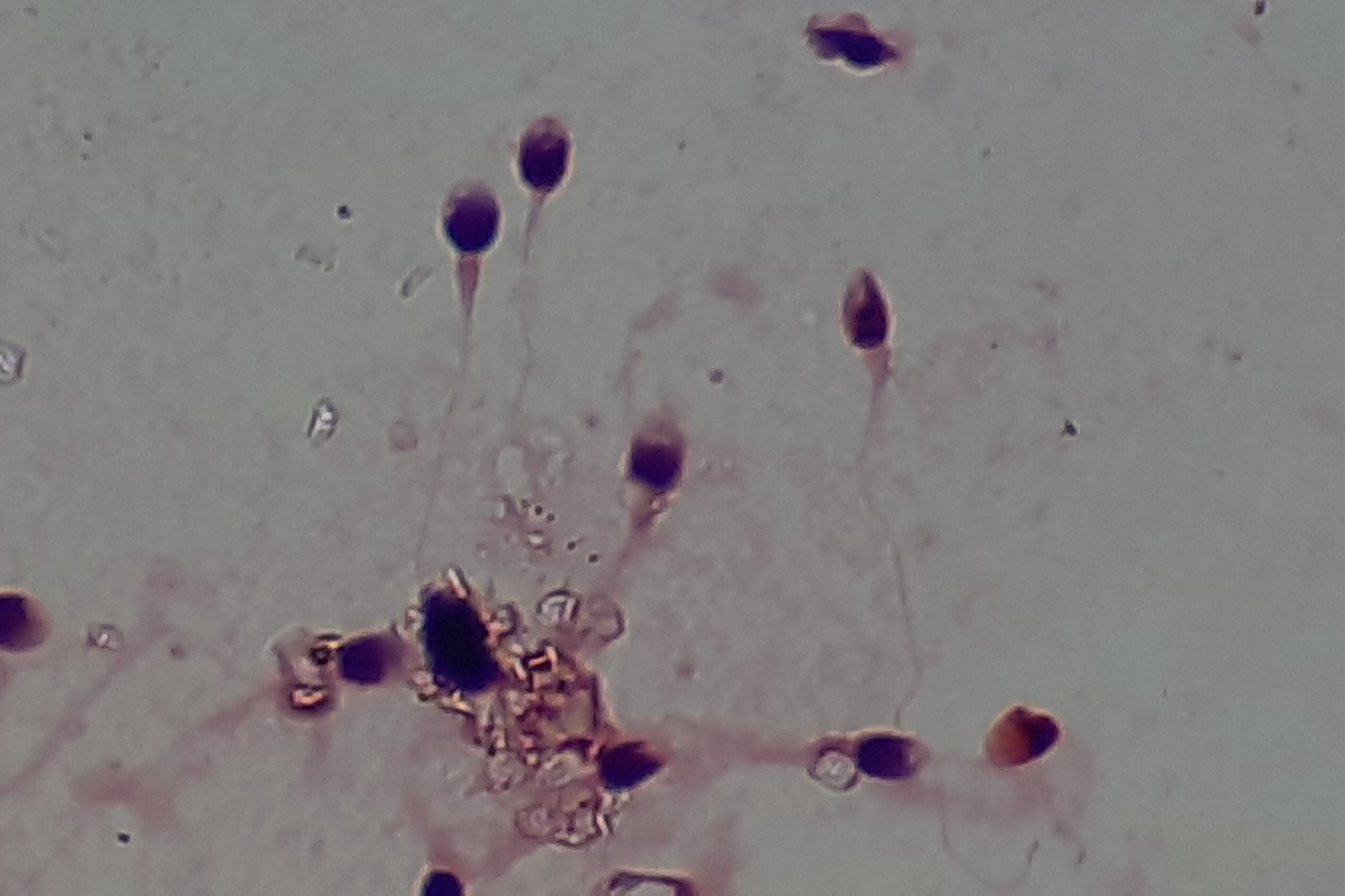
Protein fibers called amyloids, best known as a hallmark of Alzheimer’s and Parkinson’s disease, can carry RNA into sperm cells, which can then deliver it to embryos, according to laboratory research from Columbia University’s Zuckerman Institute. The study was published in the journal Molecular Cell (DOI 10.1016/j.molcel.2026.10.004), Columbia announced on Oct. 26.
“This is wild biology,” said senior author Anthony Fitzpatrick, a principal investigator at the Zuckerman Institute. “Amyloids are most often thought of as a hallmark of Alzheimer’s, Parkinson’s and other neurodegenerative diseases in the brain, but they also have functional roles throughout the body and keep turning up in unexpected places.”
The work started with HIV. Earlier research had found that amyloid fibrils in semen can help the virus enter cells, Columbia said. The team tested whether the fibrils could also carry RNA, which is negatively charged and binds to the positively charged fibrils. An earlier preprint version of the study says the researchers used fibrils made from a fragment of prostatic acid phosphatase, a protein found in semen.
The team used cryo-electron tomography with gold-labeled fibrils to confirm that the fibers had entered bovine sperm cells rather than simply sticking to their surface. “Seeing those amyloid fibers inside sperm cells was just so extraordinary to me,” said lead author William Mallen, who did the work as a doctoral student and is now in medical school at the University of Vermont. In human sperm, about 2.44% of live cells took up the fibrils, falling to 0.30% after treatment with the enzyme trypsin, the preprint reported. Once inside, a protein called clusterin can help release the RNA from the fibrils, Columbia said.
In mouse in vitro fertilization experiments, the fibrils carried RNA large enough to encode green fluorescent protein. Embryos fertilized with that sperm made at least 10 times more of the protein than embryos from sperm exposed to the RNA without amyloids, according to Columbia.
The researchers do not yet know what amyloid-carried RNA does inside sperm. They suggest amyloids might one day be used to deliver RNA, for example for CRISPR gene editing, which often relies on modified viruses. “Since the amyloid fibrils we looked at are human-based, hopefully the immune system won’t react in the same way it does to the repurposed viruses often used in gene therapy,” Mallen said. The preprint’s authors declared no competing interests.