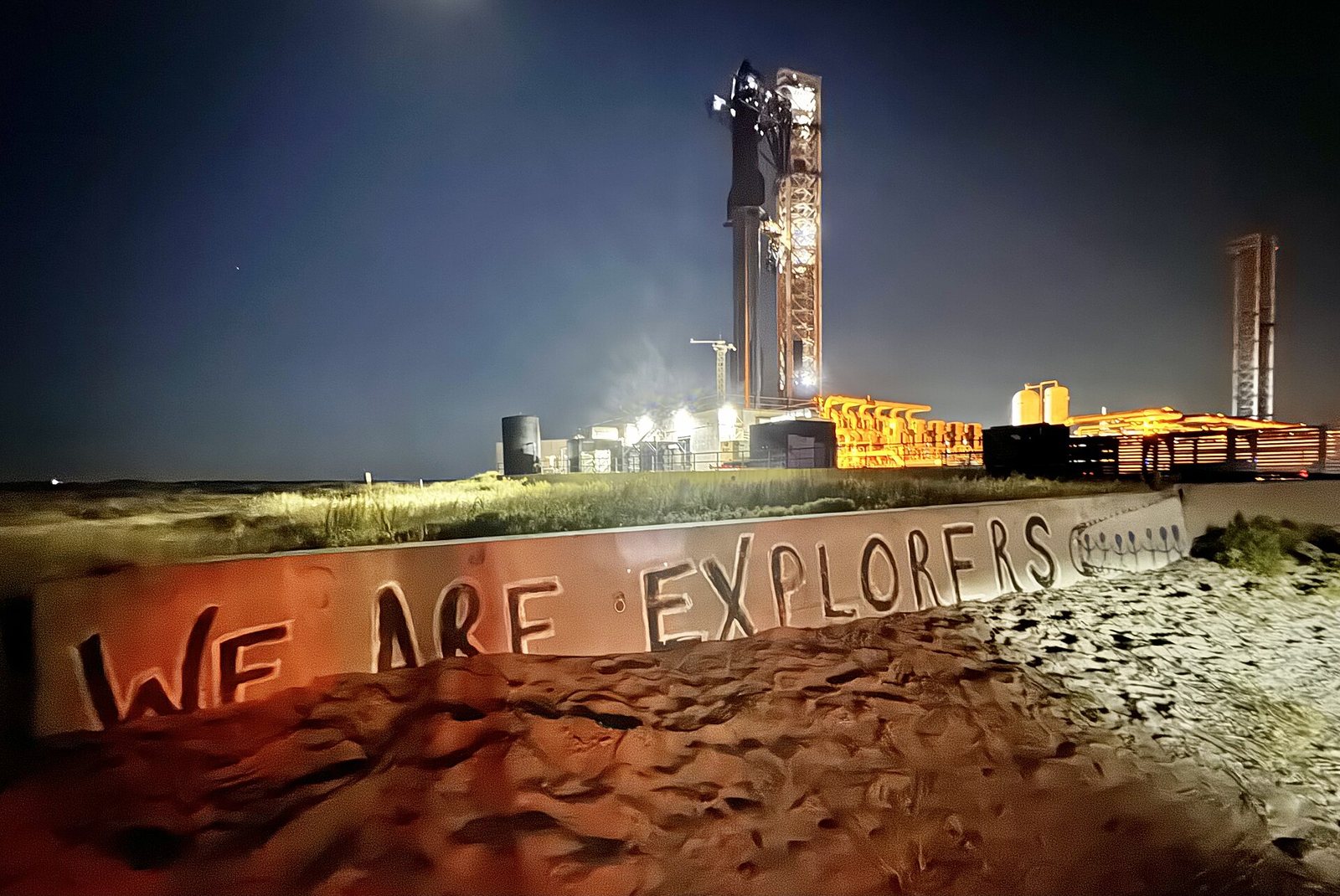
SpaceX’s Starship completed its first orbital test flight on Monday, launching from Starbase near Boca Chica, Texas, as Flight 14 — the company’s most ambitious integrated Starship mission to date after 13 prior suborbital attempts.
Liftoff came at about 7:48 a.m. Central Time. The Super Heavy booster’s 33 engines lofted the stack; after separation, one of Starship’s six engines failed during ascent, leaving SpaceX to decide whether to continue to orbit. About 22 minutes into the flight, the team decided it was safe to proceed, NPR (opens in new tab) reported.
On orbit, Starship deployed 26 next-generation Starlink V3 satellites — the first Starlink V3 satellites deployed into orbit; a batch carried on Starship’s suborbital July flight burned up on reentry, and the V3s are too large for Falcon 9. SpaceX had planned roughly six orbits over about 10 hours at around 170 miles altitude. After the engine issue, the flight-control team shortened the mission “out of an abundance of caution,” SpaceX said, deorbiting for a splashdown north of Hawaii about three hours after launch.
The Super Heavy booster did not attempt a tower catch; it simulated a landing and splashdown in the Gulf of Mexico while SpaceX tested software and hardware upgrades. Reentry heat-shield performance was a key data goal; cameras on some Starlink satellites were tasked to observe the shield. Ocean splashdown ended with the usual tip-over and propellant fireball seen on prior water landings.
Starship is central to SpaceX’s growth plans for larger Starlink vehicles and eventual NASA lunar missions. SpaceX has also announced a $100 billion Louisiana facility with dozens of launch pads, aiming to begin Starship launches there in 2029, NPR (opens in new tab) reported.