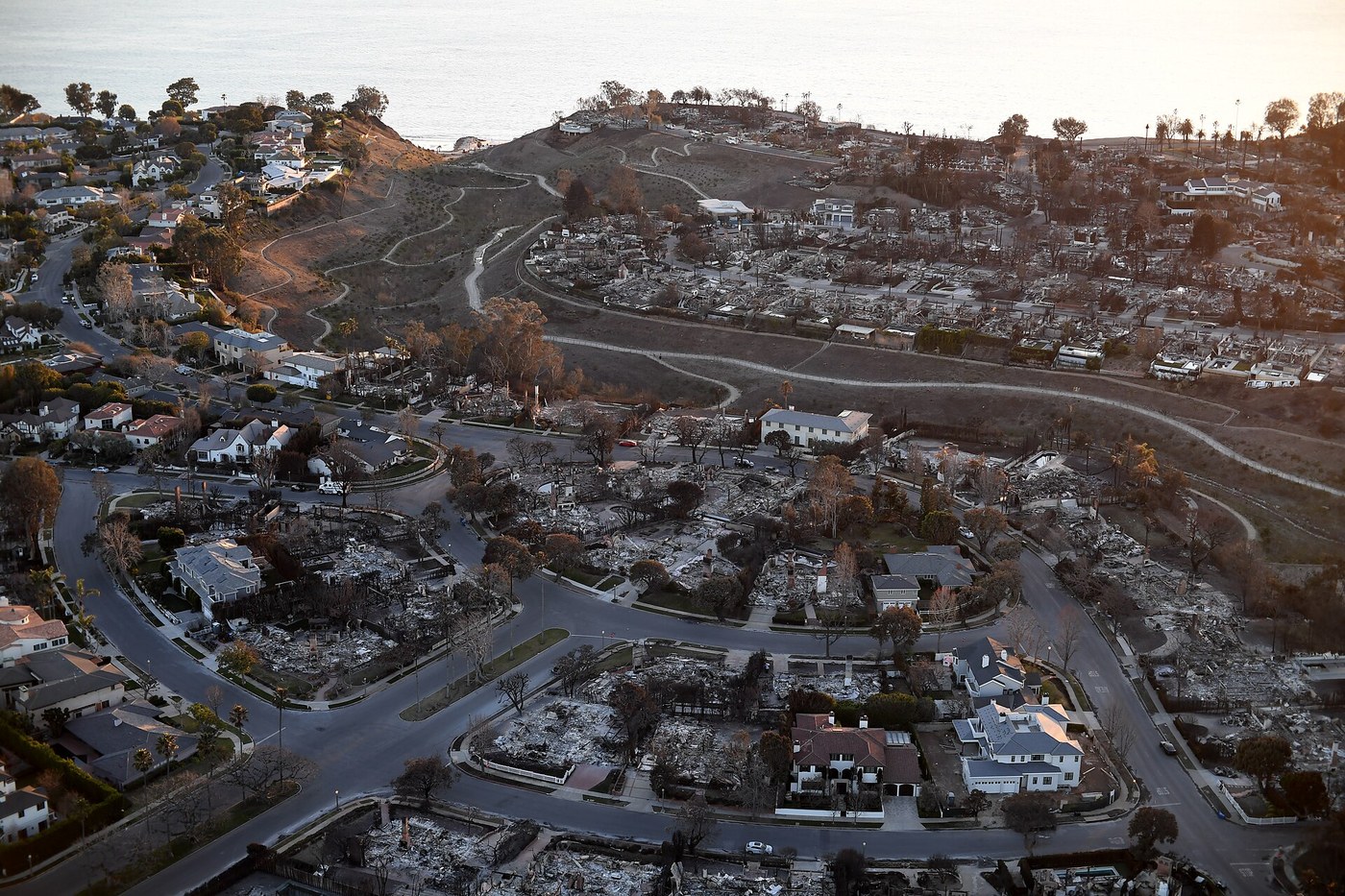
Wildfire losses to buildings in the United States could nearly triple by 2060 if the country continues current patterns of climate change, development and fire management, according to a study published Tuesday in Nature Communications by researchers at the University of Colorado Boulder (opens in new tab). The team estimated that up to 449,100 buildings could be destroyed or damaged under a business-as-usual scenario with moderate climate mitigation and no new fire adaptations, the university said.
The researchers reconstructed fire risk to structures from 1945 to 2023 and then modeled risk through 2060 using weather, climate and housing-density data, according to the university and Inside Climate News (opens in new tab). The western U.S. would remain the center of structural losses, while the increase in risk would be largest in the central U.S., where fire activity is rising in grasslands and prairies, the university said. The authors projected a five-fold increase in burned area in the East, Inside Climate News (opens in new tab) reported.
In the West, 30% of the census tracts projected to see the highest increase in risk experience poverty and a disproportionately high housing burden, the university said. "This is a call for action," lead author Virginia Iglesias, director of Earth Lab at the Cooperative Institute for Research in Environmental Sciences, said in the university's release. "Not doing anything is always an option. Here's what happens," she told Inside Climate News (opens in new tab).
Max Moritz, a wildfire specialist at the University of California, Santa Barbara, who was not involved in the study, called it "a really interesting, novel approach," but noted a limit: "These kinds of models—they don't do wind," he told Inside Climate News (opens in new tab). "Some of the places that are pointed out in papers like this could be even worse than we think." The authors considered the business-as-usual scenario unlikely to persist, given changes such as new fire codes already under way in some states, Inside Climate News (opens in new tab) reported.