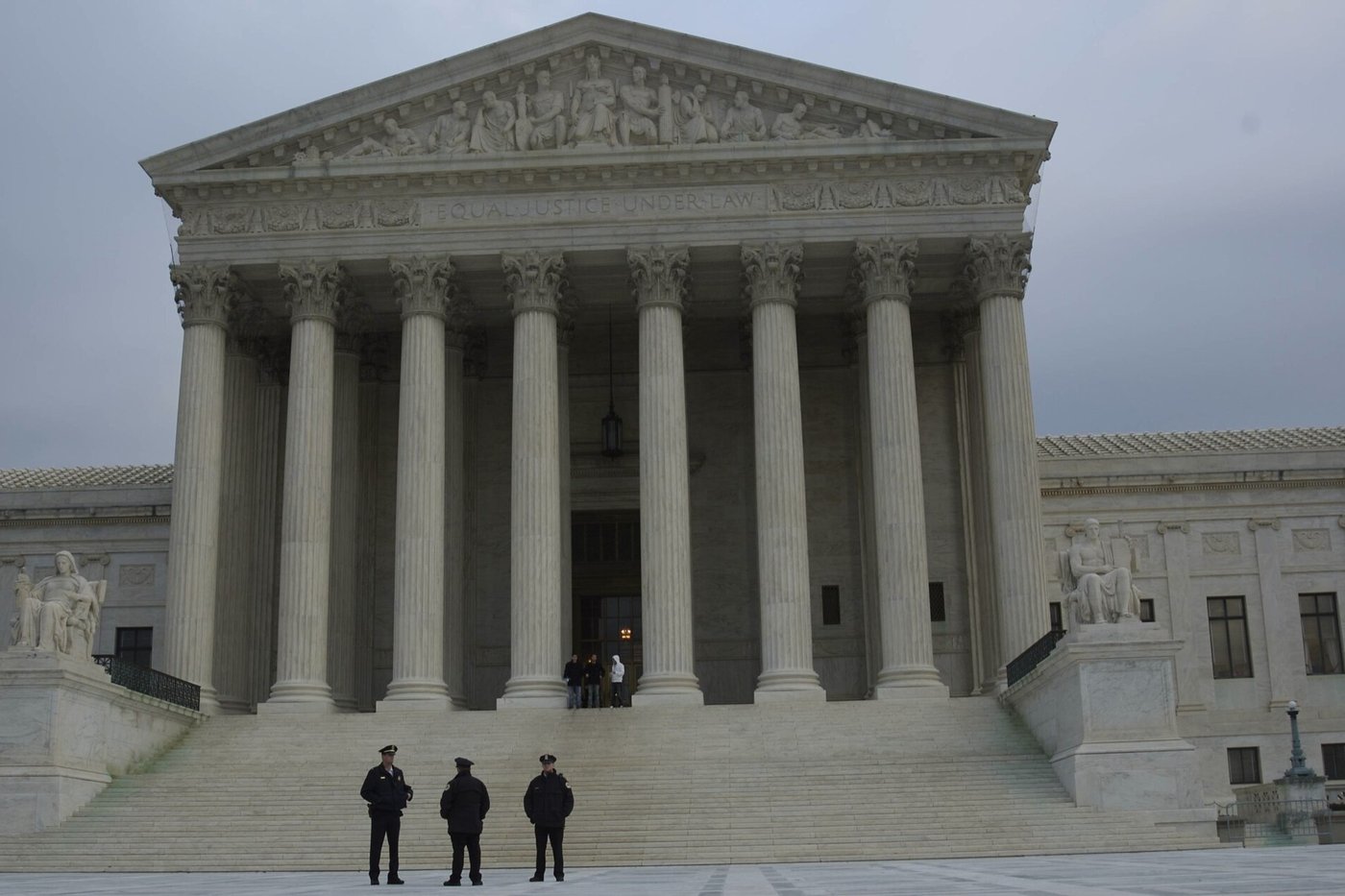
The Supreme Court on Tuesday refused to revive a 2024 regulation that let immigration judges set aside some deportation cases. The decision leaves in place a court judgment, agreed to by Texas and the Justice Department, that struck down the rule.
The order was one sentence long and unsigned. It said the stay application, filed with Justice Samuel Alito and referred by him to the full court, “is denied.” No justice noted a dissent.
The rule was adopted in 2024 by the Justice Department's Executive Office for Immigration Review. It allows “administrative closure,” in which a judge can pause a deportation case so an immigrant can seek protection or other legal status from U.S. Citizenship and Immigration Services, a separate agency. A crime victim or witness applying for asylum is one example, SCOTUSblog (opens in new tab) reported.
Texas sued over the rule in June in federal court in Wichita Falls, where Chief U.S. District Judge Reed O'Connor is the only judge. The state argued that immigration review officials had no authority to adopt it. A few hours after the case was filed, the Justice Department and Texas jointly asked O'Connor to enter judgment for the state. The department also asked him to bar the agency from adopting a similar rule in the future. He granted both requests the same day, according to SCOTUSblog (opens in new tab).
Baltimore; New Haven, Connecticut; Columbus, Ohio; and the immigrant legal services group Centro Legal de la Raza then tried to join the case to defend the rule, since neither side planned to. O'Connor ruled they lacked standing. The U.S. Court of Appeals for the 5th Circuit refused to put the judgment on hold while their appeal goes forward.
In their Oct. 9 application, the challengers called the agreement the product of “egregious collusion,” SCOTUSblog (opens in new tab) reported. Solicitor General D. John Sauer told the court the challengers were trying to turn a dispute over whether they could join the case into an attack on the judgment itself. Texas argued that pausing the ruling would revive a rule the district court had declared unlawful.
The order does not end the challengers' appeal in the 5th Circuit. Until a court rules otherwise, immigration judges cannot use administrative closure.