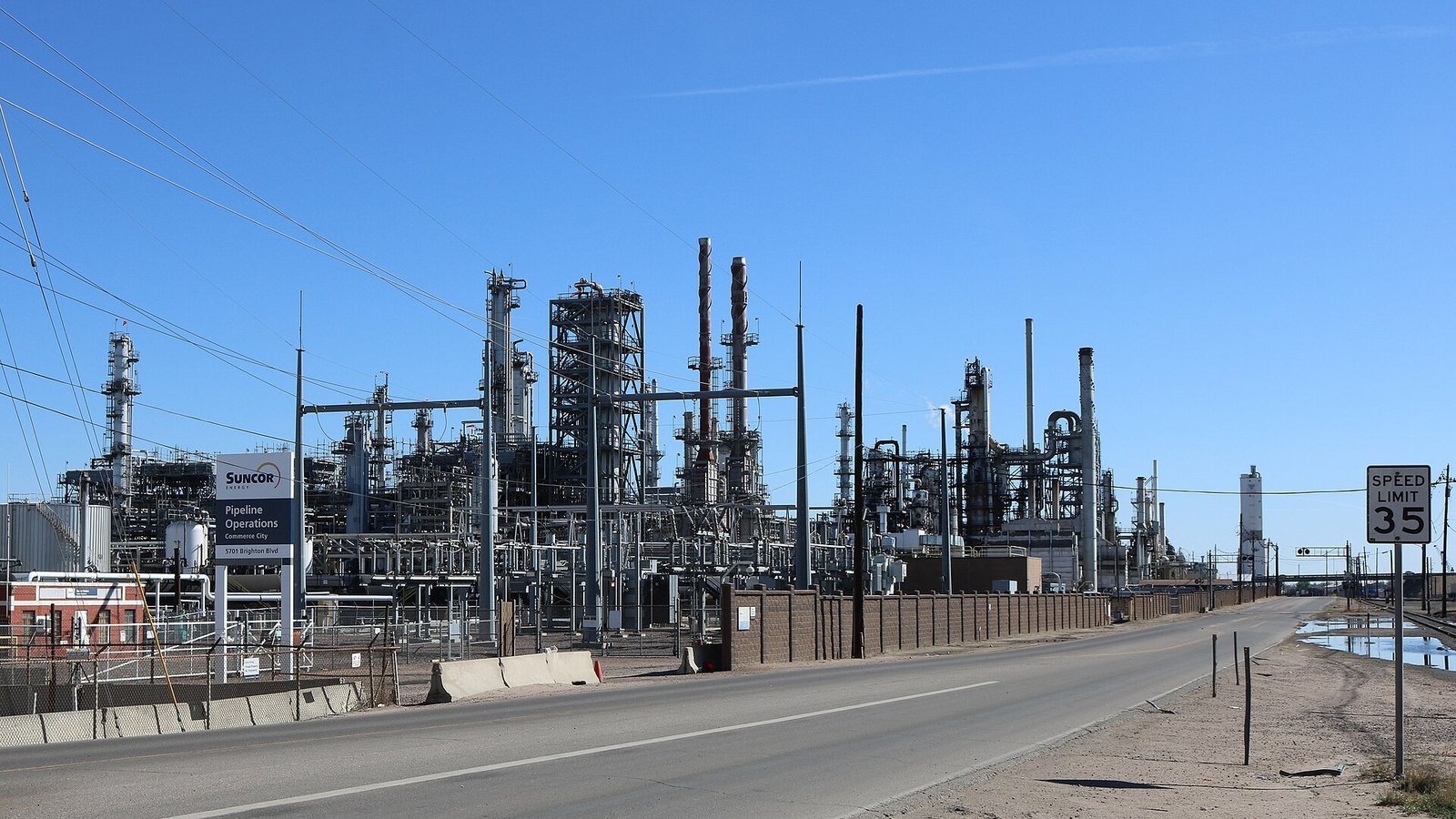
The Supreme Court opened its new term Monday with nearly two hours of argument in Suncor Energy v. County Commissioners of Boulder County, a test of whether a Colorado city and county can pursue state-law claims seeking climate-change damages from Exxon Mobil and Suncor Energy. Only eight justices took part; Justice Samuel Alito recused himself last week without giving a reason, CBS News (opens in new tab) reported.
Boulder alleges the companies’ production and allegedly deceptive marketing of fossil fuels contributed to climate change and the costs it faces from heat, wildfires and ecosystem damage. The companies deny the allegations. The Colorado Supreme Court allowed the case to proceed, and the companies appealed. The suit has not gone to trial, Roll Call (opens in new tab) noted. NBC News (opens in new tab) reported that the outcome could affect more than two dozen similar suits by cities and counties.
Kannon Shanmugam, arguing for the companies, said both the Constitution and the Clean Air Act bar such claims. “A state does not have the power to regulate out-of-state conduct based solely on attenuated effects on the state,” he said, according to the official argument transcript. Principal Deputy Solicitor General Sarah Harris, arguing for the Trump administration in support of the companies, said the suit “egregiously exceeds” constitutional limits on state authority.
Justice Brett Kavanaugh was among the most vocal in backing the companies’ federal-law argument. Citing Milwaukee I and II, Ouellette and AEP, he said those cases “make crystal-clear that interstate air and water pollution are matters for federal law unless Congress specifically preserves state law,” according to the transcript. Chief Justice John Roberts pressed Boulder’s lawyer, Kevin Russell, on copycat suits: “presumably, if you prevail, the next day, a municipality in every single state will file a lawsuit, they’ll probably copy your pleadings,” Roberts said, per the transcript. Roberts also noted that state courts routinely hear suits over harmful products made out of state.
Justice Elena Kagan compared the case to earlier litigation against tobacco companies and opioid makers, which was allowed to proceed. She also asked why a Clean Air Act path was not “the more natural and simpler route towards their view of what should happen here,” according to the transcript. Justice Sonia Sotomayor said Boulder’s suit does not seek to cap emissions, and Justice Neil Gorsuch, noting EPA’s recent disclaimer of authority over greenhouse gases, asked whether under the companies’ theory “nobody can sue at all,” the transcript shows.
Russell argued that Boulder is suing over deception, not emissions. “No, it is not an effort to reduce emissions,” he said, according to the transcript. The Washington Examiner (opens in new tab) reported that the justices did not appear convinced the suit is constitutionally barred but that a majority seemed open to ending it on Clean Air Act grounds. A 4-4 split would leave the Colorado ruling in place and let the case go forward. A decision is expected by summer 2027.