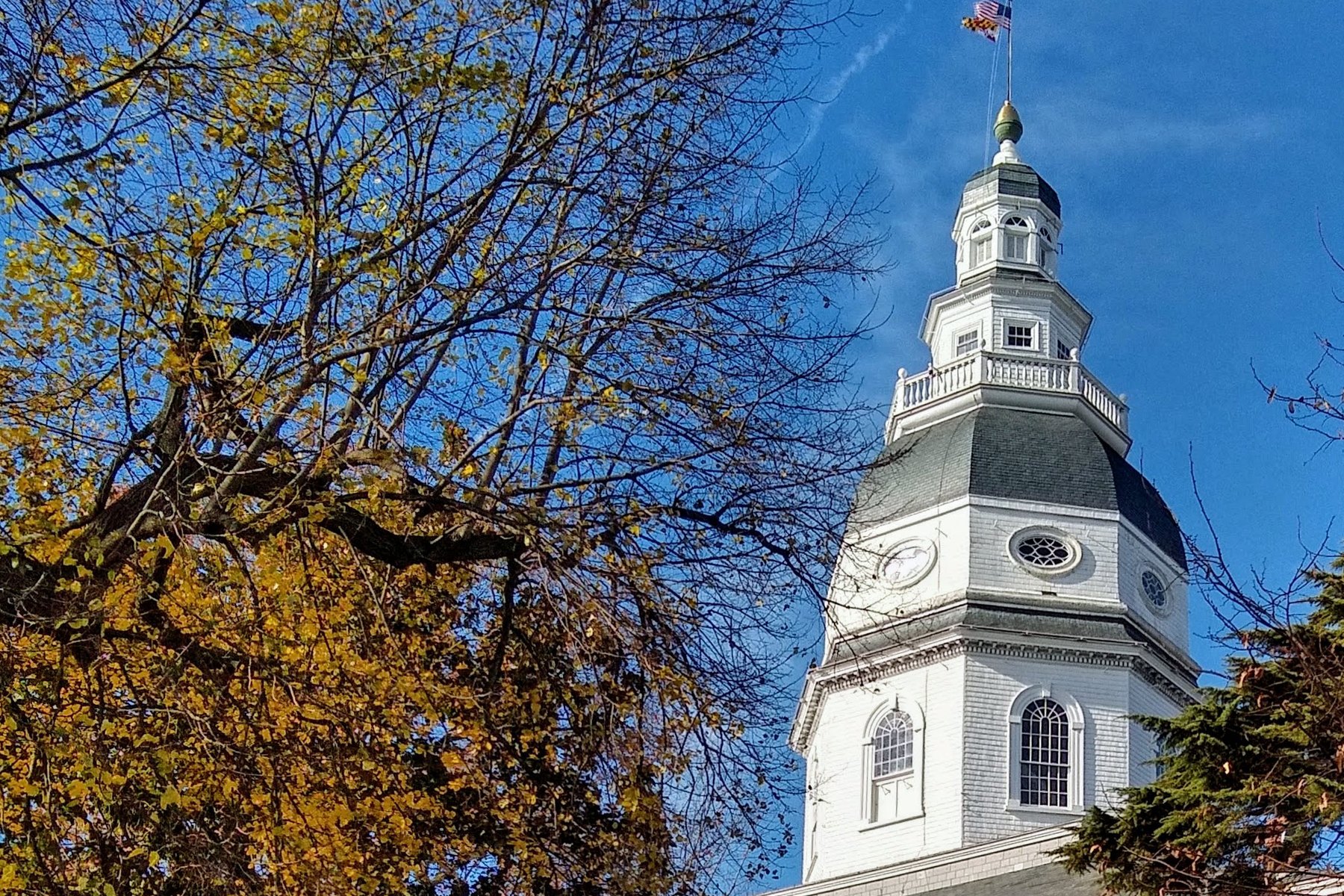
The Supreme Court on Monday declined to hear a challenge to Maryland laws that prohibit firearms in sensitive places such as schools, parks and government buildings, leaving in place a lower-court decision that upheld the rules, CBS News (opens in new tab) reported. The appeal was brought by a group of Maryland residents and gun rights groups.
Justice Clarence Thomas agreed with the decision not to take the case but said he is skeptical of the constitutionality of sensitive-place restrictions and urged the court to consider the issue in a more narrowly focused case. "I harbor serious doubts that our Nation's historical tradition of firearm regulation supports many of these sweeping restrictions," he wrote. "In an appropriate case, this Court should consider whether particular sensitive-place laws are consistent with the right to public carry."
Maryland bars firearms on school property, at public demonstrations and on public transit, as well as in parks, museums and casinos. Limits enacted in 2023, after the Supreme Court's 2022 decision recognizing a right to carry a gun outside the home, added daycare and medical facilities, government buildings and places where the public gathers for "entertainment, educational enrichment or other collective social pursuits." A federal district court had ruled for the challengers on public demonstrations and places that sell alcohol for on-site consumption, but the 4th U.S. Circuit Court of Appeals held that all of the challenged restrictions are consistent with the Second Amendment, according to CBS News (opens in new tab).
The challengers told the justices that the constitutionality of "so-called 'sensitive place' bans is among the most critical questions facing the judiciary" since the 2022 ruling. Maryland Attorney General Anthony Brown argued the laws fit a "rich American tradition" of barring guns in certain locations, including those that are "confined and crowded," CBS News (opens in new tab) reported.
Also on Monday, the court declined to hear a California physician's challenge to the state's requirement that continuing medical education courses include instruction on implicit bias, Fox News (opens in new tab) reported. Thomas, joined by Justice Samuel Alito, dissented. "A State cannot regulate its way out of First Amendment scrutiny," Thomas wrote. Dr. Azadeh Khatibi brought the suit with the nonprofit Do No Harm; California argued that instructors must include the topic but are not required to endorse it and may openly disagree with it, according to Fox News (opens in new tab).