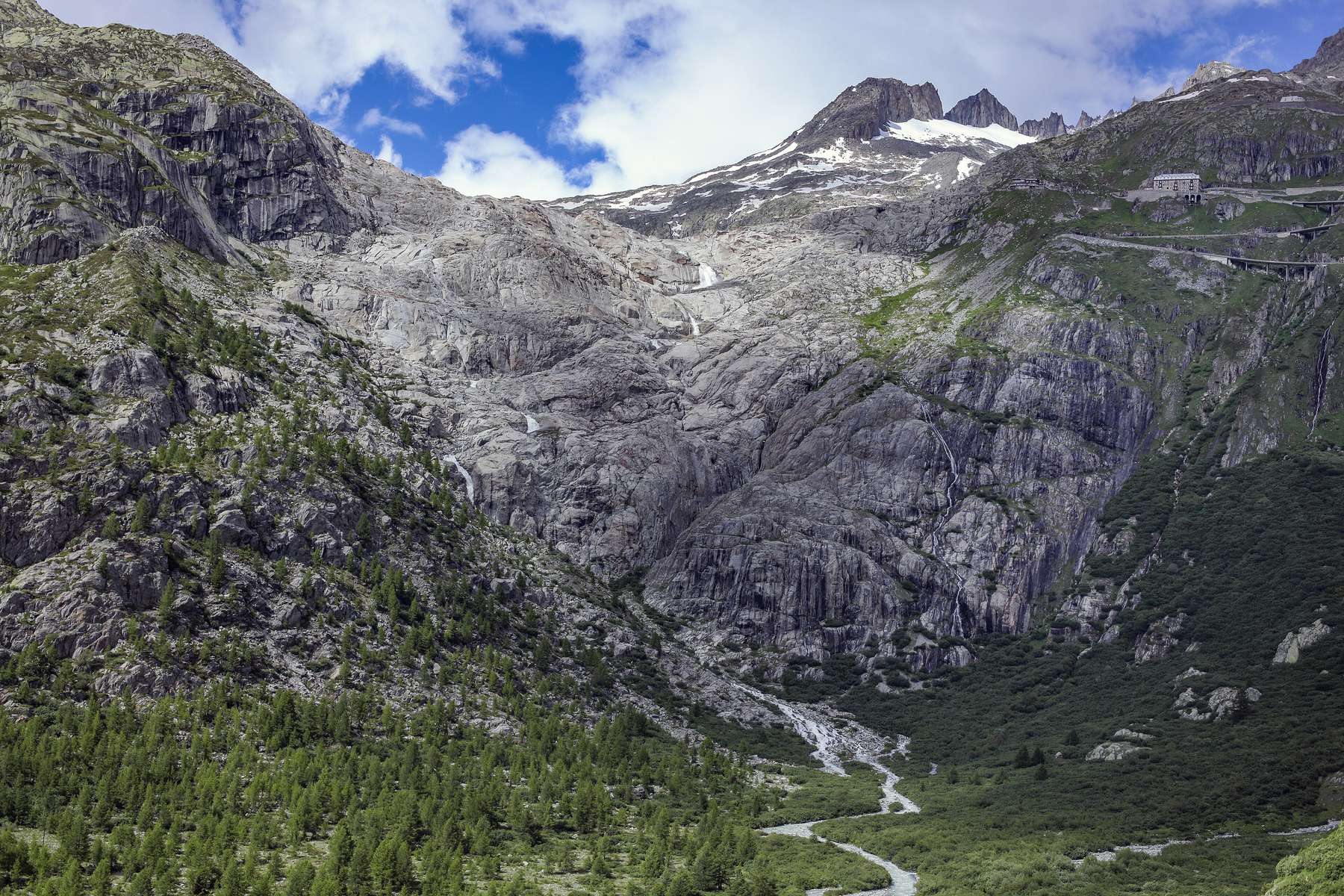
Switzerland’s glaciers lost more than 5% of their ice volume in 2026, according to an ETH Zurich (opens in new tab) summary of the annual report from the Swiss Academy of Sciences, which is based on data from the GLAMOS monitoring network. The BBC (opens in new tab), the Guardian (opens in new tab), swissinfo and the Associated Press put the loss at 5.5%. ETH said nearly 20% of the country’s glacier volume has disappeared over five years, and the Guardian (opens in new tab) put the loss since 2021 at 19.4%.
The AP and swissinfo reported that this year’s loss was the second largest in percentage terms, behind 2022. According to ETH, glaciers thinned by 2.5 to 4 meters on average, and some glacier tongues lost up to 10 meters. Swissinfo reported that the lowest monitoring point on the Aletsch Glacier lost 13 meters.
ETH said the Rhône, Aletsch and Clariden glaciers recorded their greatest melt since measurements began, and the AP added the Allalin glacier to that list. ETH said several smaller glaciers have disappeared completely, including Bella Tola in Valais and Griessfirn in Glarus. Griessfirn is the glacier that swissinfo and the BBC (opens in new tab) call Plattalva and the Guardian (opens in new tab) calls Plattalvafirn, or Griess glacier; the World Glacier Monitoring Service lists it under both names. Swissinfo reported that Plattalva was declared extinct after disappearing completely in September, and that in the 1950s it hosted what glaciologist Matthias Huss called probably the world’s most detailed glacier monitoring program. Huss said this summer may have marked the end of at least 30 small glaciers, according to swissinfo.
The year started with a poor winter. ETH said winter snowfall was among the 10 lowest on record. On 76 days the freezing level sat above 4,000 meters, which ETH described as more than twice the average and a Swiss record. By September there was no snow left even at 3,500 meters. Swissinfo reported that the date by which the year’s snow had melted and the glaciers began losing their own ice came on June 29. The Guardian (opens in new tab) reported that MeteoSwiss found April to September to be the hottest and driest such period since 1864.
From July to September, the glaciers released about 2,200 billion liters of meltwater, more than four times Switzerland’s annual household drinking-water use, ETH said. The BBC (opens in new tab) reported that the Rhine hit record lows in some places this year.
“It's really just disastrous,” Huss told the BBC (opens in new tab). He told the Guardian (opens in new tab): “What we are seeing now is a complete explosion of these melt rates, leading to the disintegration of glaciers. They're really just falling apart.” Speaking to the AP, he said: “The warming that we are experiencing now can be attributed 100% to anthropogenic climate change. It's as simple as that.” According to swissinfo, the Swiss Academy of Sciences said that under such conditions “Alpine glaciers have no chance of surviving in the long term.”