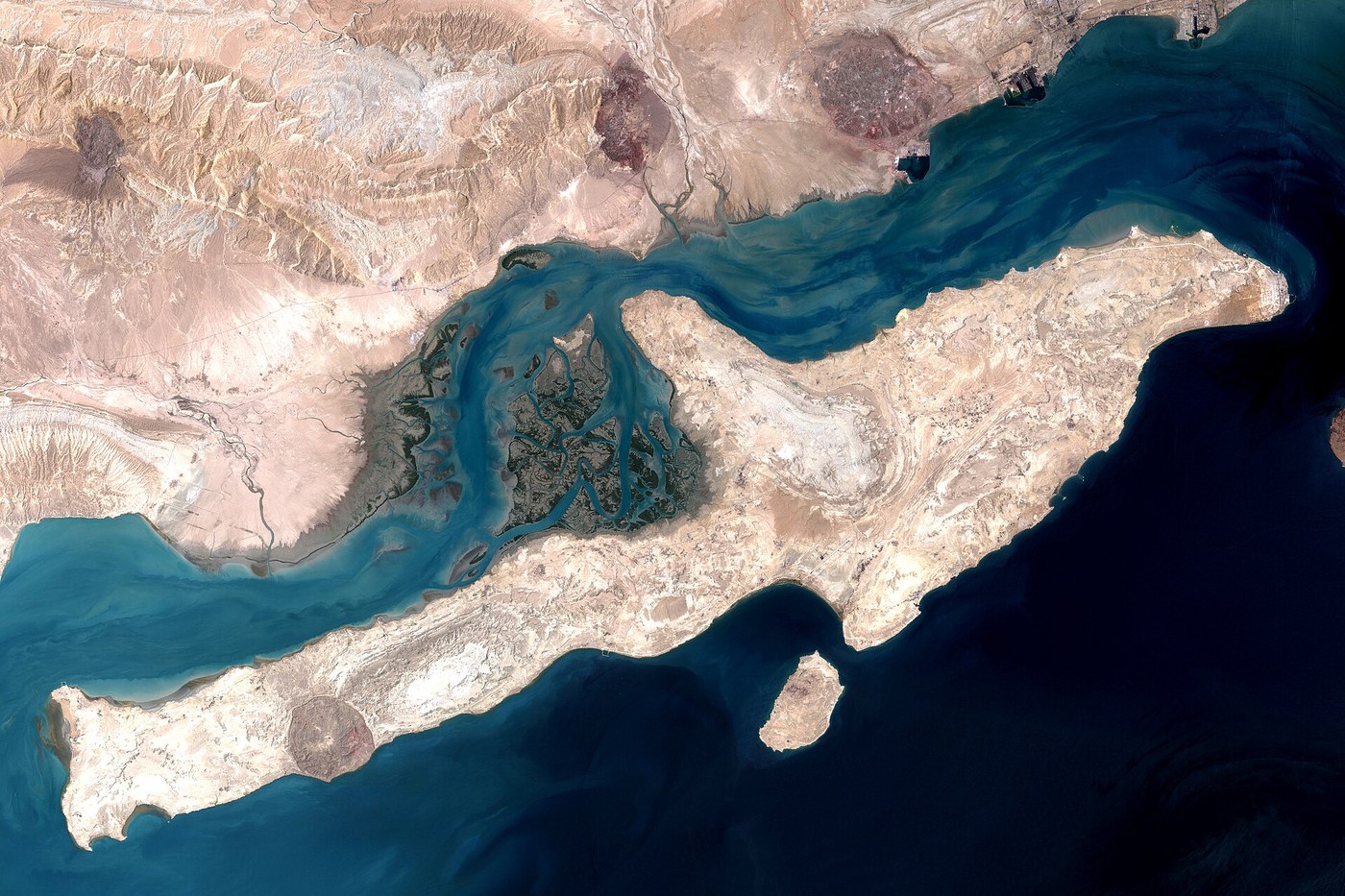
The United States carried out limited strikes on Iran's Qeshm Island in the Strait of Hormuz on Monday, U.S. officials told CBS News (opens in new tab), Fox News (opens in new tab) and ABC News (opens in new tab), describing them as defensive. A senior U.S. official told CBS News (opens in new tab) the strikes came after Iran's Islamic Revolutionary Guard Corps fired at an American aircraft.
A U.S. official who spoke on condition of anonymity said the strikes targeted "Iranians using surface to air missiles against US assets," the Australian Associated Press (opens in new tab) reported. The Guardian (opens in new tab) reported the U.S. described the targets as missile batteries from which Iranian attacks on U.S. planes had been mounted, and Iran International (opens in new tab), citing Axios, reported that a U.S. fighter jet destroyed an IRGC surface-to-air missile launcher on the island. The details of the targets come from U.S. officials and have not been independently confirmed.
The strikes do not signal the resumption of major combat operations against Iran, an official told ABC News (opens in new tab), and an official told Fox News (opens in new tab) they were not the beginning of an escalation. President Trump told Fox & Friends on Tuesday: "We took some out last night. It's just a minor attack. It wasn't war." ABC News (opens in new tab) said U.S. Central Command did not respond to its requests for comment.
Iranian state media reported several explosions on Qeshm Island. Iran's deputy foreign minister, Kazem Gharibabadi, said Tehran retained "the right to legitimate self-defense" after the strikes, CBS News (opens in new tab) reported. Iran's chief negotiator, Mohammad Ghalibaf, made no direct mention of the strikes in an address to parliament but said any miscalculation by the U.S. would lead to an unpredictable Iranian response, according to the Guardian (opens in new tab).
The strikes came hours after Vice President JD Vance said he was optimistic about diplomacy. "The President and I both feel pretty good about the prospects for potentially coming to a negotiated settlement," Vance said, according to Iran International (opens in new tab). Qatar said Tuesday that it still saw hope for an interim deal and that Washington and Tehran were reviewing proposals, Euronews (opens in new tab) reported.
On Tuesday, Iran's parliament speaker, Mohammad Bagher Ghalibaf, who is also Tehran's chief negotiator with the U.S., said: "The ball is now in America's court to prevent war," the BBC reported. Euronews (opens in new tab) reported that Ghalibaf told parliament Iran was at its highest level of defensive readiness and warned that any U.S. strategic error would open "a new battlefield in the war."
Maj. Gen. Mohsen Rezaei, whom Middle East Eye (opens in new tab) identified as head of Iran's Supreme National Security Council, rejected a U.S. offer passed on by Qatari mediators. "America's response to the demands of the Iranian nation was insufficient. They must fully and explicitly address Iran's seven conditions and act upon them; only in this case will the Strait of Hormuz be reopened," he said on X, according to Middle East Eye (opens in new tab). Qatar's foreign ministry spokesman, Majed al-Ansari, said both sides were "reviewing the ideas and proposals we have presented," the BBC reported.
Iran's Revolutionary Guards said its forces shot down two U.S. MQM-170 drones south of Qeshm and a U.S. MQ-9 drone east of the Strait of Hormuz, the BBC and Euronews (opens in new tab) reported. Separately, the Guards' navy said three oil tankers had struck naval mines and caught fire in the strait on Tuesday after using "unauthorized" routes with their navigation systems switched off, Anadolu Agency (opens in new tab) and The Jerusalem Post (opens in new tab) reported, citing Iran's Tasnim news agency. The Guards did not name the tankers or give details on crews or casualties, and there was no immediate independent confirmation, Anadolu reported. None of the outlets reported a U.S. response to the tanker claim.