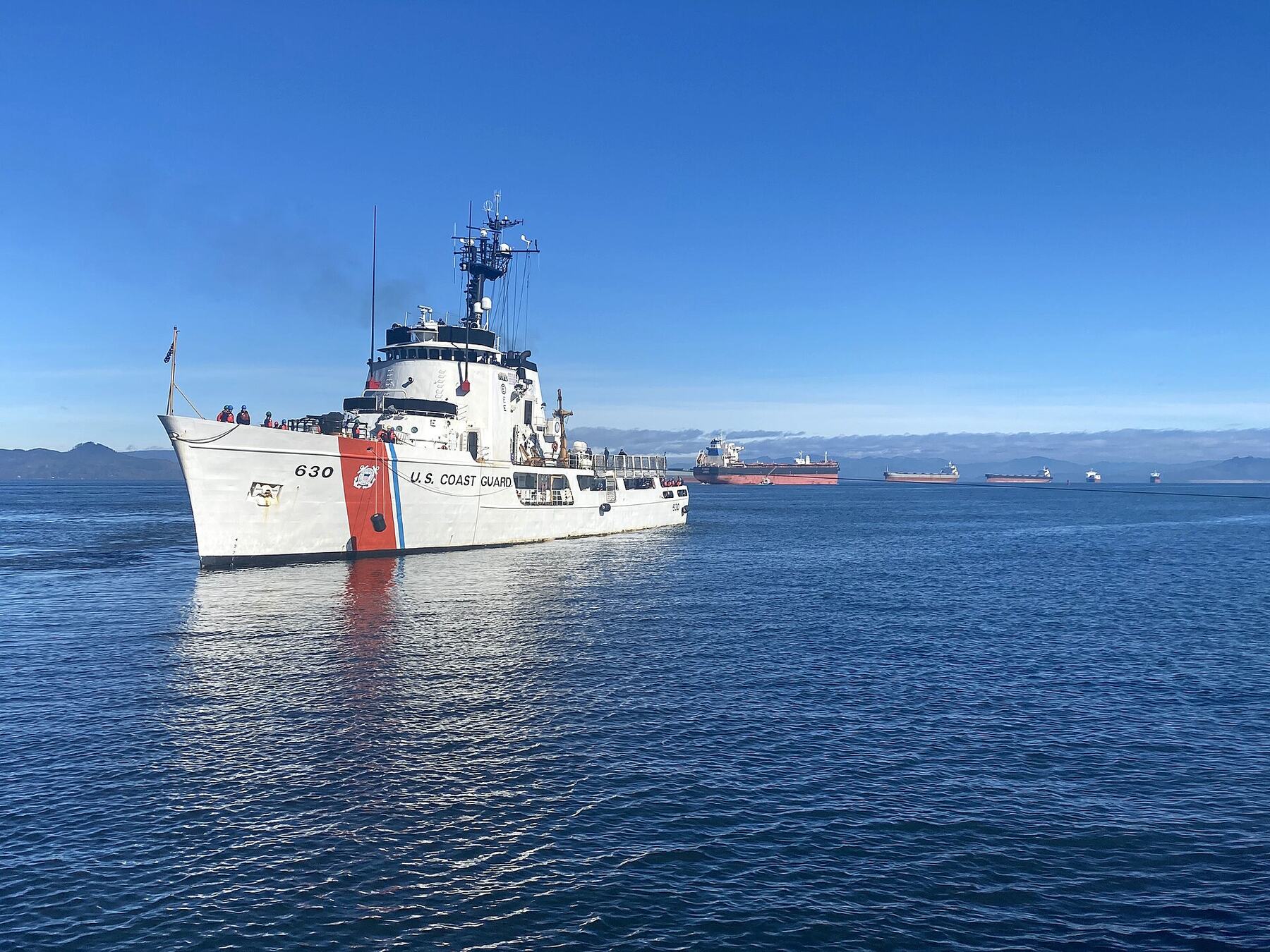
The U.S. Coast Guard (opens in new tab) said Friday that it had concluded the interdiction of the motor vessel Grace, a cargo ship it said was illegally carrying fuel to Cuba, after a coordinated enforcement effort with Mexico. A Coast Guard tactical team boarded the ship in the Caribbean in early September, the service said. Reuters, attributing the details to the Coast Guard, reported that the vessel was stopped on Sept. 5 in the Caribbean between Cuba and Mexico; the Coast Guard’s published statement says only that the boarding took place in early September. Maritime Executive (opens in new tab), citing The New York Times, also put the interception on Sept. 5.
“Grace was transiting to Cuba, carrying fuel, and was believed to be employing tactics common amongst the dark fleet,” the Coast Guard said in a statement, according to Reuters. The cutters Alert and Charles Sexton took part in the operation, and the Coast Guard escorted the ship to Progreso, Mexico, where a Mexican Navy inspection team “confirmed the presence of large quantities of fuel in the vessel’s ballast tanks,” the service said. It said the ship was also carrying several containers believed to hold illicit fuel.
The Coast Guard said the unsafe stowage of fuel in ballast tanks posed a hazard to the marine environment and that the actions of the United States and Mexico prevented an unregulated fuel transfer in the Caribbean Sea. Maritime Executive (opens in new tab) reported that the ship appears to be a containership registered in Comoros and that it remains at Progreso.
“Illicit fuel shipments violate international law and pose severe environmental threats in the Caribbean Sea,” said Vice Adm. Nate Moore, the Coast Guard’s deputy commandant for operations. “The high seas are not a sanctuary for lawlessness,” said Adm. Kevin Lunday, the Coast Guard’s commandant. “Dark fleet actors who employ deceptive tactics to engage in illicit activities will not evade justice.”
The Coast Guard said the interception follows its boarding and detention this summer of another vessel, the Jaira Provider, which it said was carrying illicit fuel to Cuba. Maritime Executive (opens in new tab), citing The New York Times, reported that the Jaira Provider had 210,000 gallons of fuel aboard when it was stopped, and that no amount has been reported for Grace.
The Coast Guard’s statement did not say how authorities knew the fuel was headed to Cuba or how much fuel Grace was carrying, Reuters reported. Reuters also reported that a U.S.-imposed oil blockade has put Cuba under severe strain amid fuel shortages and blackouts, and that the Trump administration has openly stated that its goal is to change Cuba’s government. Oil shipments from Cuba’s traditional suppliers, Venezuela and Mexico, ended after the United States ousted Venezuelan President Nicolás Maduro in January, according to Reuters.