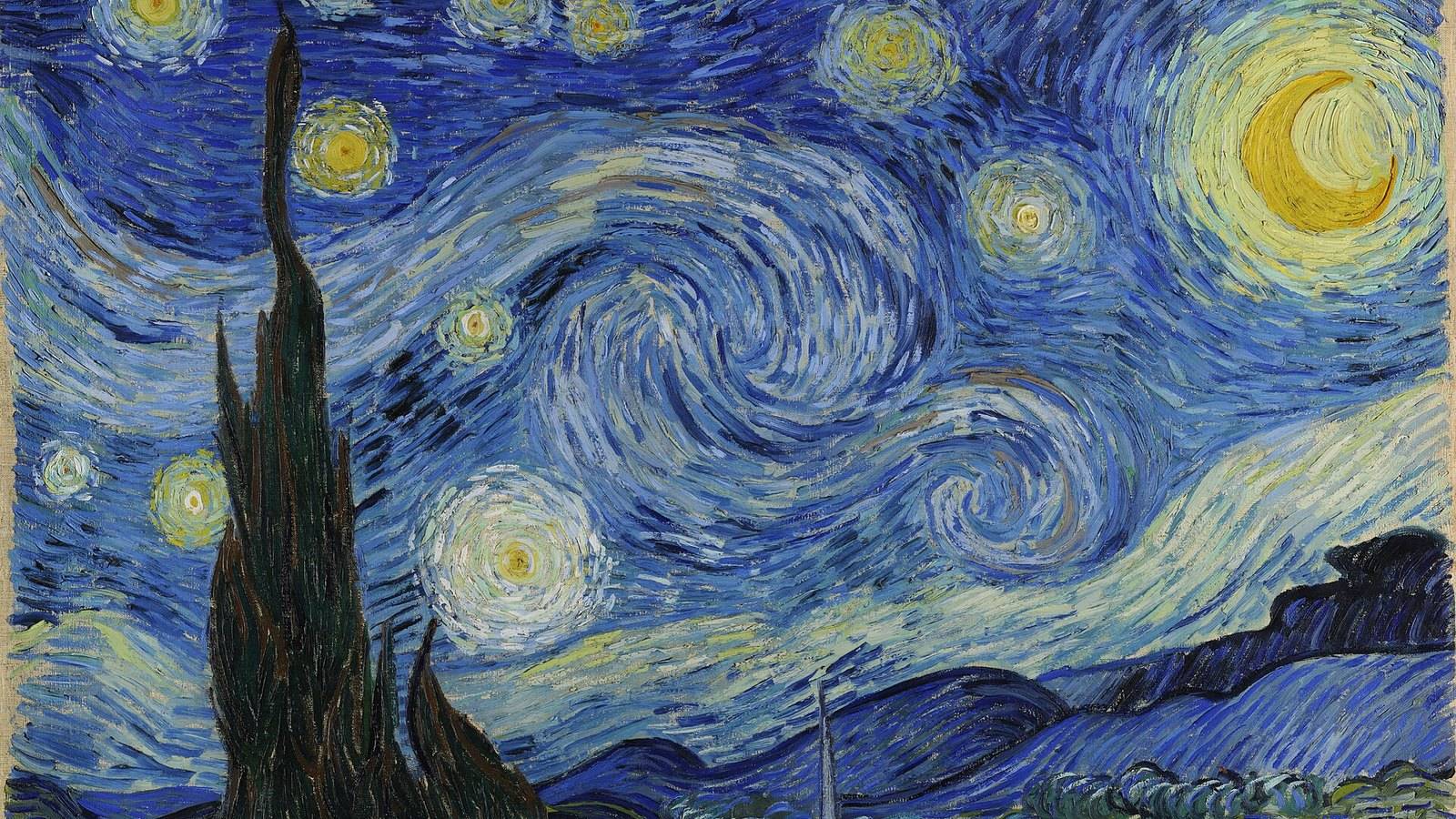
A study published Thursday in Scientific Reports (opens in new tab) argues that Vincent van Gogh’s “The Starry Night” closely matches the sky visible before dawn around July 22, 1889, from Saint-Rémy-de-Provence, France, where the artist painted it. The authors, led by Elijah Jeong-hyun Kim of SLLAB Inc. in Seoul, identify the painting’s bright points as stars of the Hyades cluster, a waning crescent Moon and the planet Venus, Science News (opens in new tab) and Space.com (opens in new tab) reported.
The team compared the positions of the painted lights with reconstructed skies using a shape-matching method called Procrustes analysis, according to the paper. “How could an invented sky fit the sky of a particular date this closely?” the authors wrote, Science News (opens in new tab) reported.
The painting is conventionally dated to June 1889, based on a letter Van Gogh wrote on or about June 18, and one of two 1980s efforts to match its stars to the sky tied the scene to the constellation Aries around June 19, Science News (opens in new tab) reported.
Donald Olson, an astronomer at Texas State University who has written about astronomy in art, disputed the new dating. “The authors’ assumed narrow field of view, essential for their theory that the stars of the Hyades fill most of the canvas, is inconsistent with the much wider field of view required to encompass ‘The Starry Night’s’ round hills and cliffs,” he told Science News (opens in new tab).